

Knitting patterns are your roadmap in the world of knitting, and this Beginner’s Guide will help you navigate them. They guide you through each project, showing you exactly how to create beautiful pieces. Did you know that 73% of beginners stop knitting because they find patterns confusing? Understanding these patterns can change that! By learning how to read them, you’ll boost your confidence and enjoy your knitting journey even more. Mastering simple first patterns, as outlined in this Beginner’s Guide, helps you improve your skills and achieve better results.
Key Takeaways
Understanding knitting terms and abbreviations boosts your confidence. Familiarize yourself with basic terms like knit, purl, and gauge to make reading patterns easier.
Start with simple projects to build your skills. Choose smooth, light-colored yarn and the right needles to enhance your learning experience.
Practice regularly to improve your knitting. Mistakes are part of the journey, so learn how to troubleshoot common issues to keep progressing.
Knitting Terms
When you start knitting, you’ll encounter a variety of terms that might seem overwhelming at first. But don’t worry! Understanding these terms will make your knitting journey smoother and more enjoyable. Let’s break down some common terms and abbreviations you’ll find in patterns.
Common Terms
Here are some key knitting terms you should know:
Knit (k): This is the basic stitch that forms the foundation of most patterns.
Purl (p): Another fundamental stitch, often used in combination with knit stitches.
Gauge: This refers to the number of stitches and rows per inch. It’s crucial for ensuring your project turns out the right size.
Yarn Over (yo): A technique used to create an extra stitch, often for lace patterns.
Finished Object (FO): This is what you call your completed project.
Unfinished Object (UFO): This term refers to projects you’ve started but haven’t finished yet.
Beginners often find abbreviations like ‘k2tog’ (knit two together), ‘ssk’ (slip, slip, knit), and ‘psso’ (pass slipped stitch over) confusing. These terms help keep instructions concise and universally understood, making it easier for you to follow along.
Abbreviations and Symbols
Knitting patterns use a lot of abbreviations and symbols. Here’s a quick reference to help you decode them:
Abbreviation | Meaning |
|---|---|
k | Knit |
p | Purl |
st(s) | Stitch(es) |
yo | Yarn over |
rem | Remaining |
rep(s) | Repeat(s) |
RS | Right side |
WS | Wrong side |
Different regions may use different terms. For example, in American patterns, you might see “bind off,” while British patterns use “cast off.” Here’s a quick comparison:
American Term | British Term |
|---|---|
Bind off | Cast off |
Gauge | Tension |
Slipped stitch (sl st) | Slipped stitch (sl1k) |
Stockinette stitch | Stocking stitch |
Yarn over | Yarn over needle |
Seed stitch | Moss stitch |
Visual aids can also help you understand knitting symbols better. For instance, a knit stitch symbol often looks like a blank square, while a purl stitch might be represented by a dot. These symbols simplify the instructions, making it easier for you to follow along.
If you’re looking for resources to help you learn more about knitting terminology, consider checking out a glossary of knitting terms. These resources provide straightforward definitions for tools, materials, and techniques essential for beginners.
With these terms and abbreviations in your toolkit, you’ll feel more confident tackling your first knitting patterns. Remember, practice makes perfect, and soon you’ll be reading patterns like a pro!
How to Start Knitting Patterns
Starting your knitting journey can feel overwhelming, but breaking it down into manageable steps makes it easier. Let’s explore how to read knitting patterns and choose the right materials for your first project.
Step-by-Step Reading
When you first look at a knitting pattern, it might seem like a foreign language. But don’t worry! Here’s a simple guide to help you decode it:
Understand the basic structure: Familiarize yourself with the layout of a pattern. Most patterns start with a materials list, followed by gauge information, and then the actual instructions.
Identify stitches: Focus on the Stocking Stitch, as it’s one of the most common. Recognizing how knit and purl stitches look will help you follow along easily.
Learn how stitches sit on the needle: This is crucial to avoid twisting your work. Make sure you understand how to hold your yarn and needles correctly.
Many beginners face challenges when starting to read patterns. You might struggle with abbreviations or feel intimidated by the overall structure. Remember, with practice, reading patterns becomes easier and more intuitive.
Choosing Yarn and Needles
Choosing the right yarn and needles is essential for a successful project. Here are some tips to guide you:
Select smooth, light-colored yarn: This helps you see your stitches clearly. Avoid fuzzy or dark yarns, as they can make it hard to track your progress.
Consider the type of yarn: Cotton, wool, and acrylic are great choices for beginners. They’re easy to handle and affordable. A good yarn choice enhances visibility and makes learning easier.
Pick the right needles: When selecting needles, think about the yarn type. Metal needles work well with animal fibers like wool, while wood or bamboo needles suit plant-based yarns like cotton. Comfort matters too! If you have hand pain, lighter materials can reduce strain.
Here’s a quick comparison of different needle types:
Needle Type | Advantages | Disadvantages |
|---|---|---|
Single-Pointed Knitting Needles | Easiest for beginners, prevents stitches from slipping off, good for flat projects. | Limited to flat projects only. |
Circular Knitting Needles | Versatile, ergonomic design reduces wrist strain, suitable for various projects. | Can be confusing for absolute beginners. |
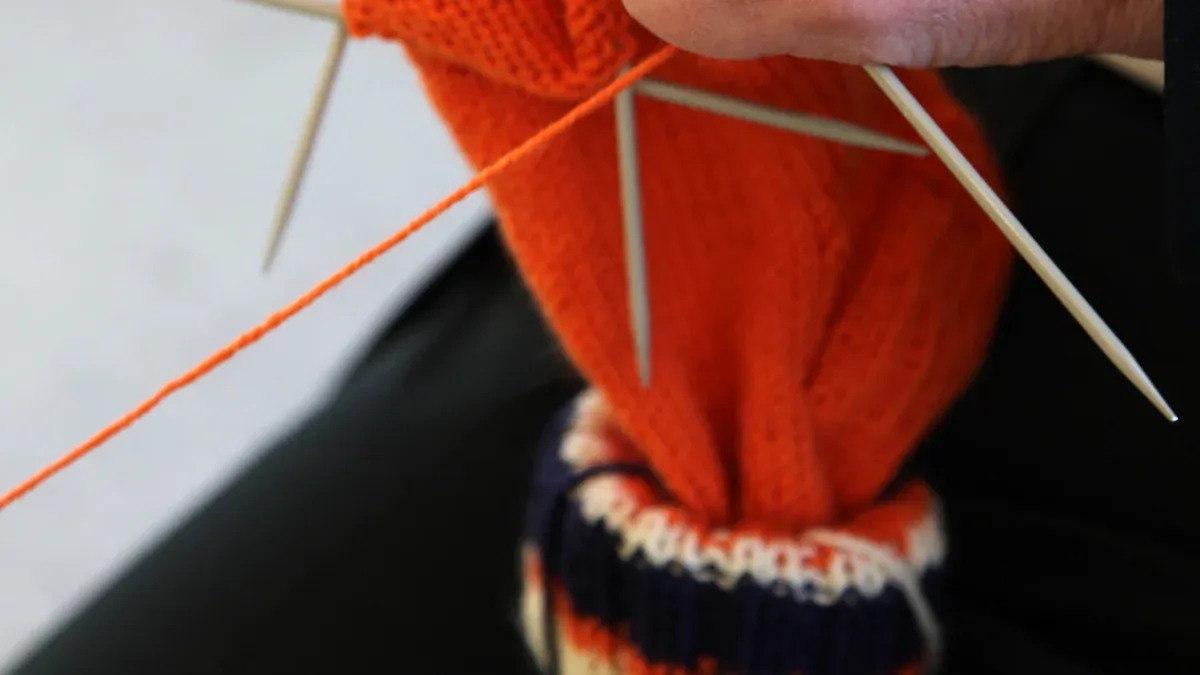
Double-Pointed Knitting Needles | Ideal for seamless circular knitting, great for small projects. | Requires more skill to manage multiple needles. |
By organizing your materials before starting, you’ll set yourself up for success. Keep your needles sorted by type and size for easy access. Use labeled containers or fabric cases to stay organized.
With these tips, you’re ready to dive into your first knitting project. Remember, practice makes perfect, and soon you’ll be creating beautiful pieces with confidence!
Troubleshooting Knitting Issues
Common Mistakes
As a beginner, you might encounter a few common mistakes while knitting. Here are the top five issues to watch out for:
Not thinking about the yarn properly.
Not knitting a gauge swatch.
Ignoring the needle size or type.
Using the wrong cast-on or cast-off techniques.
Creating too tight or loose stitches.
These mistakes can lead to frustration, but recognizing them early can help you avoid problems down the line.
Fixing Errors
When you make a mistake, don’t panic! Here are some tips to help you fix common knitting errors:
Dropped stitches: If you notice a dropped stitch, use a crochet hook to pull it back up to the current row. This technique helps maintain the integrity of your project.
Incorrect stitch counts: If you accidentally create extra stitches, unravel the last few rows until you reach the mistake. Then, re-knit those rows carefully.
Tension issues: If your stitches are too tight or loose, try experimenting with different needle sizes. This can help you achieve a more consistent tension. Remember to maintain a steady wrapping method around the needle.
To prevent recurring mistakes, always knit a gauge swatch before starting your first project. This simple step can save you a lot of trouble later on. Additionally, focus on accuracy rather than speed. Taking breaks to review your work can help you catch errors early.
With these troubleshooting tips, you’ll feel more confident tackling your knitting projects. Remember, every knitter makes mistakes-what matters is how you learn from them!
Knitting can be a rewarding journey! Remember these key points as you practice:
Start with simple projects to build your confidence.
Use familiar techniques to ease into new patterns.
Regular practice enhances your skills and helps you learn from mistakes.
Mastering knitting patterns takes time and patience, but the joy of creating beautiful pieces makes it worthwhile. So grab your yarn and needles, and enjoy the process!
FAQ
What is the best yarn for beginners?
Choose smooth, light-colored yarn. It helps you see your stitches clearly and makes knitting easier.
How long does it take to learn knitting?
Learning knitting varies for everyone. With practice, you can become comfortable in a few weeks.
Can I knit without a pattern?
Absolutely! You can create your own designs. Just start with basic stitches and let your creativity flow.
