

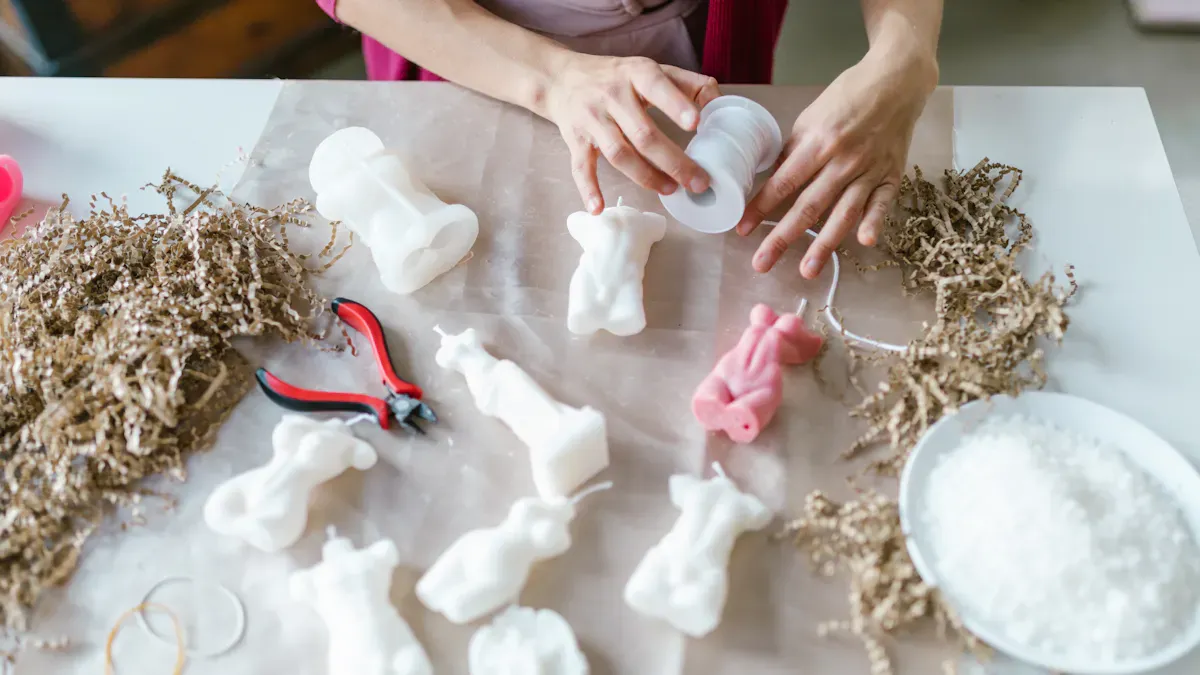
Crafting means making something skillfully, like a story or an object. It requires care and attention. Almost half of U.S. adults like arts and crafts. They enjoy activities like painting, knitting, or journaling. In fact, 71% did a craft project in 2024.
Doing activities like knitting or crochet helps you relax. It creates a rhythm that matches your brain and heart rate. This helps you get into a creative flow.
When you start crafting, you use your creativity. You also find joy in making beautiful handmade items. This Crafting Guide will help you enjoy making things by hand.
Types of Crafting
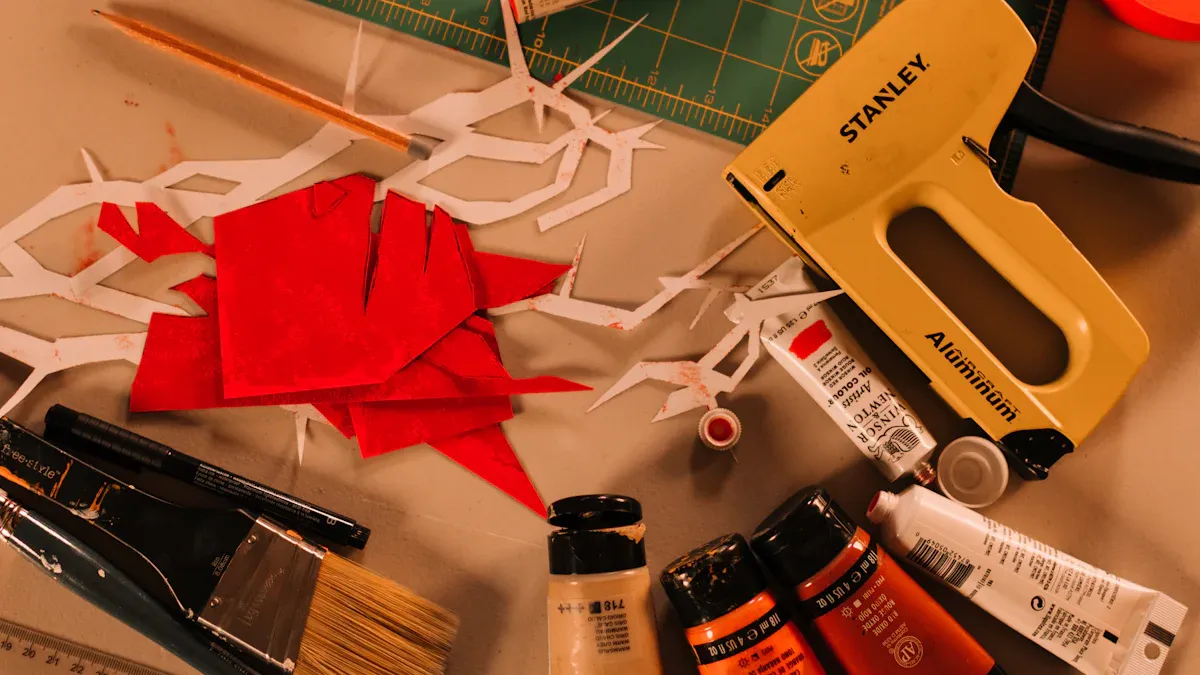
Crafting has many types. Each type lets you show your creativity in different ways. Let’s look at some popular crafting types you can try!
Paper Crafts
Paper crafts are a great way to start crafting. You can make cards, scrapbooks, or even origami. Here are some important materials for paper crafting:
- Cardstock Paper: This strong paper is good for cards and other projects.
- Adhesives: Different glues help you put your creations together.
- Mixed Media: Use paper with paints and inks for cool art.
DIY paper crafts are becoming more popular. They bring joy and help with mental health.
Textile Crafts
Textile crafts use fabrics and threads. You might like:
- Embroidery: This craft is easy for beginners. You can find kits that teach you the basics.
- Knitting and Crocheting: These activities are popular, especially with younger crafters. They are a fun way to make beautiful items.
Textile crafts let you play with colors and textures. Each project can be different.
Woodworking
Woodworking is a fun craft. It lets you make useful and artistic pieces. Here are some easy projects for beginners:
- Cutting Board: Learn basic skills while making something handy.
- Mortise and Tenon Joint: Learn this important joint to improve your woodworking.
- Shop Cabinets: Build cabinets to practice making dados and rabbets.
Woodworking teaches you useful skills and creates beautiful handmade items.
Jewelry Making
Making your own jewelry can be very rewarding. Start with these methods:
- Basic Tools: Get to know pliers and files.
- Hammering: This method gives character to your pieces.
- Cold Connections: Join metal pieces without soldering for a special touch.
Jewelry making helps you show your style and make personal gifts.
Other Crafts
Don’t stick to just traditional crafts! Try unique options like:
| Craft Category | Description |
|---|---|
| Contemporary furniture | New designs that change traditional styles |
| Fiber arts and textiles | Artistic quilts and textile creations |
| Ceramics and pottery | Modern styles of classic pottery |
These new crafts give you exciting chances to be creative.
Join the world of crafting! Each type lets you learn, create, and enjoy making things with your hands.
Essential Tools for Beginner Crafters
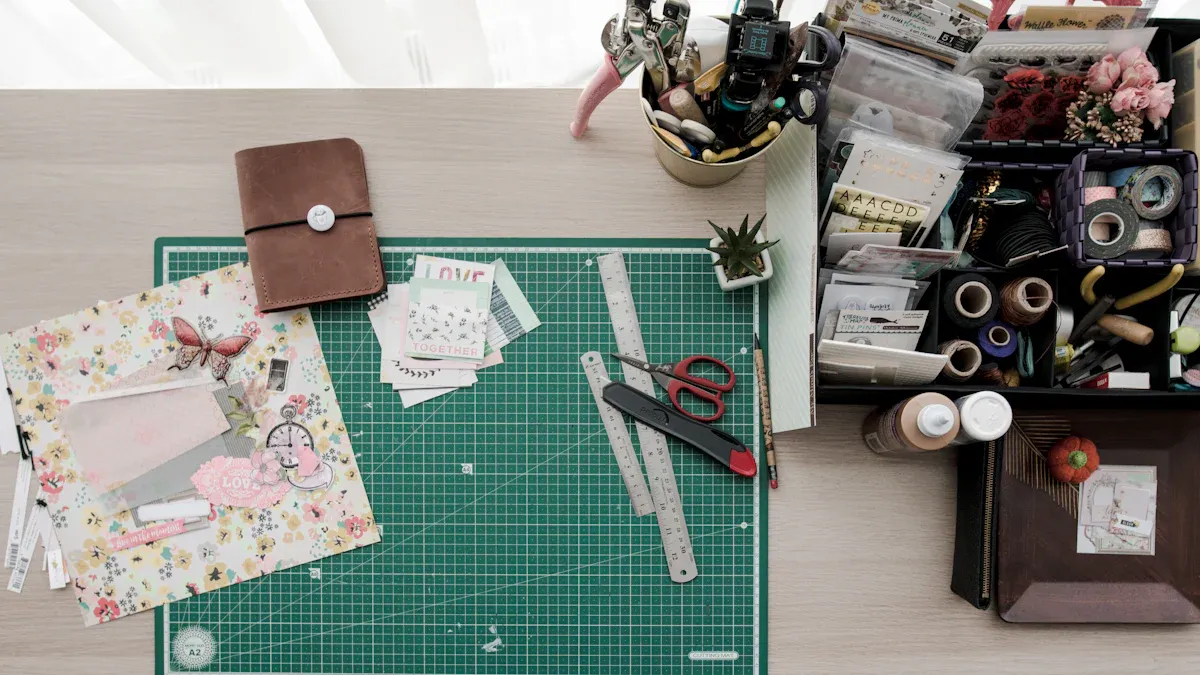
When you start crafting, having the right tools is very important. Here’s a list of basic tools, materials, and extra supplies that can make your crafting better.
Basic Tools
Every beginner crafter should have some basic tools. These tools can be used for many types of crafting. Here’s a list of what you need:
- Fabric scissors: Great for cutting fabric well.
- Scissor sharpener: Keep your scissors sharp for clean cuts.
- Rotary cutter, mat, and ruler: Important for quilting and paper crafts to make straight lines.
- Magnetic pin holder: Keeps your pins neat and easy to find.
- Glue gun: A must-have for many projects, it sticks materials together well.
- Cutting mats: Protect your surfaces while you cut.
- Weeding tools: Good for taking off extra material from vinyl projects.
- Versatile cutting machines like the Silhouette Cameo 4: Let you explore many creative ideas.
These tools are cheap, with many costing less than $20. This makes it easy to start crafting without spending too much money.
Recommended Materials
Picking the right materials is just as important as having the right tools. Here are some common materials for beginner crafters:
- Paper Crafting:
- Scissors
- Precision knives
- Paper trimmers
- Craft glue
- Double-sided tape
- Construction paper
- Cardstock
- Textile Crafting:
- Felt
- Cotton fabric
- Embroidery thread
- Sewing needles
- Woodworking:
- Hot glue gun (for holding heavier materials)
These materials will help you make many projects, from simple cards to detailed fabric designs.
Additional Supplies
To make your crafting experience better, think about adding some extra supplies. These items can make your projects more fun and creative:
| Crafting Supply | How It Enhances the Crafting Experience for Beginners |
|---|---|
| Paper Towel Rolls | Good for cleaning up and can be used for paint rollers and custom stamps. |
| Toilet Paper Rolls | Help build 3D projects, promoting eco-friendly crafting. |
| Tin Foil | Adds shine and texture, serving as a unique canvas for trying new things. |
| Bubble Wrap | Creates cool textures and patterns, adding depth to your projects. |
| Pens, Pencils, Markers | Important for sketching and adding bright details, connecting imagination and creation. |
| Paper Plates | Cheap palettes for mixing paint or making 3D elements, offering flexibility. |
| Tape | Useful for clean lines and adding decorations. |
| Storage | Helps keep materials organized, keeping your workspace tidy and supporting creativity. |
These supplies can inspire your creativity and make crafting even more enjoyable!
Always remember to be safe when using tools. Use your equipment carefully, pay attention to your work, and store sharp tools safely to prevent accidents.
With these essential tools and materials, you’re ready to become a successful beginner crafter. Don’t be afraid to take classes or watch tutorials to learn new skills and improve!
Crafting Guide for Beginners
Choosing Your First Project
Starting to craft can be exciting but also a bit scary. To help you, here are some tips for picking your first project:
- Pick Simple Projects: Choose larger hooks and thicker yarn. This makes it easier to see your stitches. Good projects are baby blankets or scarves. They have straight rows, so you can practice basic skills.
- Test Your Skills: Always make a practice swatch before starting a big project. This helps you check your tension and stitch. Use cheap yarn for practice to avoid wasting materials.
- Follow Easy Patterns: Look for patterns that say ‘Easy’ or ‘Simple.’ These will fit your skill level and keep you motivated. Check the ‘Notions’ section for patterns needing few extra materials.
Avoid mistakes like starting with a big project, which can be too much. Focus on one craft at a time to build your skills without getting tired. Here’s a quick look at some common mistakes beginners make:
| Common Mistake | Explanation |
|---|---|
| Starting with a large project | Beginners may feel overwhelmed and discouraged if they choose a complex project right away. |
| Not specializing | Trying to do too many crafts at once can lead to burnout; focusing on one craft allows for skill development. |
| Ignoring local resources | Community centers offer classes that provide hands-on learning opportunities, which can be beneficial for beginners. |
Setting Up Your Craft Space
Making a safe and useful craft space at home is important for a good crafting experience. Here are some steps to set up your area:
- Create Designated Work Zones: Set up areas for messy activities, like painting, and clean tasks, like using electronics. This helps you organize your space well.
- Float a Craft Island Table: Place your main work table in the center of the room for easy access and to use your workspace better.
- Reduce Clutter: Keep your workspace neat by removing things you don’t need. A tidy area can lower stress and boost creativity.
- Use Transparent Containers: Clear storage makes it easy to find supplies quickly, saving you time and frustration.
- Label Everything: Labeling helps ensure that materials go back to their right places, keeping things organized.
Finding Inspiration
Inspiration can come from many places. Here are some good ways to spark your creativity:
- Explore Online Platforms: Websites like CRAFTSY, SKILLSHARE, and BRIT + CO have many classes and projects. These sites can help you learn new skills and find fresh ideas.
- Join Crafting Communities: Connecting with others who share your interests can give you motivation and support. Look for local groups or online forums to share your work and get feedback.
- Keep a Craft Journal: Write down your ideas, sketches, and progress. This can help you track your crafting journey and inspire new projects.
As you start crafting, remember that exploring your creativity is part of the fun. Enjoy the process, and don’t be afraid to try new things!
Tips to Enhance Your Crafting Creativity
Experimenting with Techniques
To improve your crafting skills, try new techniques. Here are some ideas to help you start:
- Pick projects that get harder slowly: Start with easy patterns. As you get better, try harder projects. This way, you will keep succeeding and stay motivated.
- Keep track of your progress: Take pictures of your work. Seeing your growth can inspire you to keep crafting.
- Join crochet groups: Talking with others who love crafting gives you support. You can share tips and learn from each other.
- Set small goals: Make clear and easy goals. This helps you grow and see how much you improve.
Joining Crafting Communities
Being part of crafting groups can boost your creativity. Here’s why you should join:
- Craft groups give emotional support, which helps you stay motivated. Sharing your wins and struggles makes you feel less alone.
- You learn new skills by sharing experiences with others. This helps you grow as a crafter.
- Making friends who love crafting makes your journey better. They understand your passion and can inspire you.
- These groups help you feel connected, especially if you feel lonely or have mental health challenges. Crafting together is a great way to bond.
Creative Challenges
Joining creative challenges can spark your imagination. Look for events near you or online that ask you to try new things. These challenges push you to try new styles and skills. Plus, they are fun!
Enjoy crafting and let your creativity shine!
Crafting is a fun way for you to show your creativity. You can try paper crafts, sewing, or woodworking. There is something for everyone to enjoy. Doing these activities can make you happier and help you feel less stressed.
Remember, crafting is not just about what you make; it’s about having fun while you create.
So, why not start now? Gather your tools, pick an easy project, and let your imagination go wild! You will find joy in making something special with your own hands.
| Key Benefits of Crafting | Description |
|---|---|
| Boosts Happiness | Crafting makes life more enjoyable. |
| Reduces Stress | Doing crafts helps lower feelings of anxiety. |
| Accessible to All | Anyone can start crafting, no matter their skills. |
Jump into the world of crafts today!
