

Should you want a backpack that looks store-bought, you can’t rely on beginner patterns or flimsy fabric calls. You’ll need templates that push your skills with structured panels, clean zipper installs, and hardware that won’t twist or fail under weight. The right pattern also tells you where to reinforce, interface, and edge-finish for a crisp shape. Some options get this balance right, and a few stand out for specific reasons…
McCall’s Patterns M7207 Backpacks Sewing Template, One Size Only

McCall’s Patterns M7207 is a strong pick should you want one versatile backpack template with multiple looks-you can sew four distinct views (A–D), from a simple drawstring style with contrast bands to a flap-and-hardware version with clips and snaps. You’ll get printed pattern pieces plus step-by-step instructions from McCall Pattern Company (copyright 2015, U.S.-printed). Choose canvas, denim, twill, or home décor cottons for structure. Plan on purchased webbing straps, four 1″ D-rings, and ribbon/cord drawstrings for A–C; add Velcro for B/C, or clips and snaps for D, plus optional alphabet appliqués.
Best For: Sewists who want a single backpack pattern with multiple style variations (A–D) and are comfortable using purchased hardware like webbing, D-rings, and optional clips/snaps.
Pros:
- Includes printed pattern pieces plus step-by-step sewing instructions for four different backpack views
- Works well with sturdy, easy-to-source fabrics like canvas, denim, twill, and home décor cottons
- Offers customizable features (contrast panels/flaps, drawstring closure, Velcro, clips/snaps, optional alphabet appliqués)
Cons:
- Requires multiple purchased notions (webbing, D-rings, ribbon/cord, and possibly Velcro/clips/snaps) that add cost and sourcing time
- One Size Only may limit fit/scale options if you want a smaller or larger backpack
- Views with hardware (especially D with clips and snaps) can be more challenging for beginners without basic installation tools/experience
Butterick B5054 Young Adult Backpack Pattern

Butterick B5054 targets young adults who want a compact, customizable backpack pattern-plus two self-lined MP3 player covers-without committing to multiple sizes. You’ll sew covers A (2″×4″) or B (2½”×4½”) with contrast vinyl windows, decorative cord, and a touch of VELCRO®. For daily carry, you can choose backpacks C/D (10″×16½”×~4″) or E (11″×15″×4″), all lined with inside pockets. You’ll add pro-looking hardware, zippers, and optional floss-and-bead embellishment. Pick denim, twill, or novelty prints; allow extra fabric for pattern matching.
Best For: Young adults (and sewists sewing for them) who want a one-size, customizable backpack pattern with optional MP3 player covers and room for creative fabric/hardware choices.
Pros:
- Includes multiple projects: two MP3 player covers (A/B) plus three lined backpack styles (C/D/E) with inside pockets
- Uses common, versatile fabrics (denim, twill, cotton prints) and offers a polished look with zippers and hardware
- One Size Only simplifies choosing sizes and supports personalization with optional floss-and-bead embellishments
Cons:
- Requires several extra notions (zippers, rings/sliders, VELCRO®, cord, beads), which can add cost and sourcing time
- Extra fabric may be needed for pattern matching (stripes/plaids/one-way designs)
- Backpack E calls for hair canvas interfacing, which may be less commonly stocked than basic interfacings
BUTTERICK PATTERNS B5505 Backpacks, One Size Only

Should you want options without hunting down multiple patterns, B5505 gives you three lined backpack designs in one envelope-each with clear, step-by-step instructions. You can sew Bag A (11½ x 12½ inches) with an inside pocket, Bag B (16 x 15) with an outside pocket, or compact Bag C (10½ x 8) featuring contrast straps, flap facing, and bands. Butterick recommends synthetic suede, plus canvas, denim, twill, or home décor fabrics for A and B, and cotton linings. You’ll add zippers and magnetic snaps (plus a D-ring for B). Allow extra for matching prints.
Best For: Sewists who want multiple backpack style options in one pattern envelope and are comfortable installing zippers, magnetic snaps, and a lined finish.
Pros:
- Includes three different lined backpack designs (A, B, C) with pockets/contrast details for variety
- Clear, step-by-step sewing instructions included
- Works with several durable fabric options (synthetic suede, canvas, denim, twill; cotton linings)
Cons:
- One size only (finished bag dimensions are fixed aside from personal modifications)
- Requires additional notions like zippers, magnetic snaps, and a D-ring (Bag B), which add cost/complexity
- Extra fabric may be needed to match plaids/stripes or align one-way prints and pile fabrics
All That Stuff Stuff Sacks Sewing Pattern #544
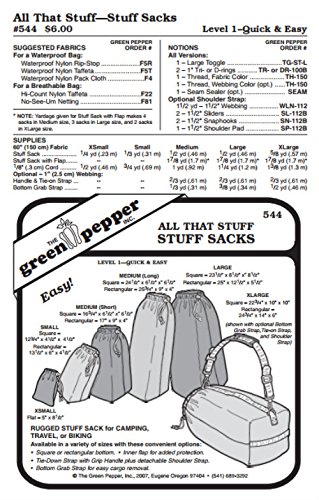
Should you desire quick wins and practical storage you can sew in an afternoon, The Green Pepper’s All That Stuff Stuff Sacks Sewing Pattern #544 delivers with multi-sized stuff sacks rated Level 1 (Quick and Easy)-a simple, no-fuss choice for hikers, campers, and anyone who needs organized rain gear and pack essentials without tackling a complex backpack build. You’ll get a pattern-only kit from The Green Pepper Inc., initially available November 2, 2016, and it’s still not discontinued. At just 3.2 ounces, it slips into your project binder easily. In case you want added peace of mind, you can check the manufacturer’s warranty link.
Best For: Beginner-friendly sewists, hikers, and campers who want quick, practical multi-sized stuff sacks for organizing rain gear and pack essentials without a complex build.
Pros:
- Multi-sized pattern for making several different stuff sack sizes
- Level 1 (Quick and Easy) design that can be sewn in an afternoon
- Still available (not discontinued) and backed by a manufacturer warranty link
Cons:
- Pattern only (no fabric, hardware, or materials included)
- Limited to stuff sacks/storage bags (not a full backpack/rucksack build)
- Warranty details require checking the manufacturer link for specifics
Simplicity SIM PAT 8357 Rag Quilted Bags, OS (ONE Size)

Simplicity SIM PAT 8357 Rag Quilted Bags (US8357OS) fits you best in case you want a playful, beginner-friendly backpack pattern that doubles as a weekend craft project. You’ll get three options: a fox face flap backpack, a flower flap backpack, and a matching flower tote, all in one size (OS). The rag quilted style adds texture and makes everyday carry feel handmade and fun. The paper pattern pack measures 8.5 x 6 x 0.15 inches and weighs just 1.76 ounces, so you can store it easily. Check the product link for warranty details and reviews.
Best For: Beginner sewists and weekend crafters who want a playful, easy-to-store paper pattern for making rag-quilted backpacks and a matching tote.
Pros:
- Includes three bag designs (fox flap backpack, flower flap backpack, and flower tote) in one pattern pack
- Rag quilted style adds fun texture and a handmade look to everyday bags
- Lightweight, compact paper pattern pack that’s easy to store and keep in a craft kit
Cons:
- One size only (OS), so there are limited sizing/fit customization options
- Paper pattern (not fabric or a finished bag), so you’ll need to source all materials separately
- Limited review volume (7 total reviews), so there’s less user feedback to reference
McCall’s K4211OSZ Dog Toy and Backpack Sewing Pattern, XS-XL

Should you want a backpack sewing pattern that doubles as a fun pet project, McCall’s K4211OSZ stands out through pairing a dog backpack (XS–XL) with templates for three quick dog toys. You’ll sew the pack in five sizes-XS to XL-so it fits a wide range of pups. The design includes handy storage pockets and sturdy handles, letting you carry essentials with control. You can choose tough fabrics like denim or corduroy for durability, or add fleece for softer toys. The package is compact (8 x 6 x 0.33 inches) and lightweight.
Best For: DIY sewers and pet owners who want an easy pattern to make a sized dog backpack (XS–XL) plus a few quick dog toys using durable fabrics.
Pros:
- Includes pattern pieces and instructions for 1 dog backpack and 3 dog toys
- Backpack comes in five sizes (XS, S, M, L, XL) for better fit across breeds
- Features storage pockets and carrying handles for practical use
Cons:
- It’s a sewing pattern only (not a finished backpack/toys), requiring fabric and supplies
- Results depend on sewing skill level and fabric choice for durability/fit
- Limited to the included designs if you don’t plan to modify/customize the patterns
Factors to Consider When Choosing Backpack Sewing Patterns
At the time you pick a backpack sewing pattern, match it to your skill level so you don’t get stuck halfway through. Check the finished size and fit, plus closure and access details, to make sure it’ll hold what you carry and stay easy to use. Also compare strap comfort options and fabric recommendations, since those choices determine how durable and comfortable your backpack feels.
Skill Level Needed
Before you pick a backpack sewing pattern, match its stated skill level to what you can confidently sew right now. Many backpack patterns label themselves beginner (Level 1), intermediate, or advanced, and that label matters. Should you be newer, choose a quick, easy build with step-by-step directions, straightforward seams, and minimal hardware, so you can focus on clean construction and finishing. As you move up, expect more complex assembly: zippers, snaps, magnetic closures, and mixing multiple fabric types. Check the notions list closely, too. D-rings, sliders, snaps, or Velcro often demand specific order and handling, and mistakes can cascade. Once you pick a pattern that fits your current skills, you’ll avoid frustration, finish the project, and build ability for the next one.
Finished Size And Fit
A pattern that matches your skill level still has to fit your real-life needs, so check the finished size next. You’ll use the listed width, height, and depth to confirm it holds what you carry-daily essentials, small gadgets, or even pet accessories. Compare those measurements to items you pack most, and consider how full it’ll get.
Fit matters, too. A backpack that’s tall or deep can feel bulky on a smaller frame, while a compact style might look fine but won’t meet your capacity goals. Choose patterns with multiple size options or variations whenever you want adjustability. Finally, account for pockets and compartments in the final dimensions, since they change usable space and organization.
Closure And Access
Access is the backpack’s handshake, and the closure you choose decides how secure, convenient, and weather-resistant it’ll be. Pick a drawstring with ribbon or cord whenever you want an adjustable opening and quick in-and-out access, but know it’s typically less theft-resistant than a zipper or snap system. Choose a flap closure should you desire style plus control: you can sew it in self-fabric or a contrasting fabric, then secure it with snaps, Velcro, or clips for varied speed and strength. Go with zippers whenever you need a fully enclosed main compartment, especially in lined patterns that add multiple pockets. Magnetic snaps split the difference for easy one-handed access. Match the closure to your use case and climate.
Strap Comfort Options
Once you’ll wear a backpack for more than a quick errand, strap design becomes the comfort deal-breaker. Choose patterns that give you wide, padded, and adjustable straps so you can fine-tune fit as loads change. Prioritize instructions that add cushioning and keep the strap edge soft against your neck and shoulders, especially with flexible webbing or fabric-backed straps. In case you’re prone to sore spots, pick patterns with ergonomic shaping or contoured straps; they spread weight and curb pressure points. Make sure the pattern lets you swap strap materials-cotton blends, twill, or denim-so you can balance breathability with structure. Bonus points provided that it includes removable or replaceable strap covers for quick comfort upgrades and personalization.
Fabric And Durability
Comfortable straps won’t matter much provided the fabric body sags, scuffs, or splits under load, so match your pattern to materials built for real wear. Choose designs that call for canvas, denim, twill, synthetic suede, or sturdy home décor fabrics whenever you’ll haul heavy or bulky items. Check that the pattern’s fabric guidance aligns with your use case; a “lightweight cotton” suggestion usually signals a softer, less rugged bag. Look for patterns that recommend structure enhancers, such as interfacing or a supportive lining in cotton blends or hair canvas, to keep panels crisp and seams stable. Should you want extra toughness and style, textured options like synthetic leather or corduroy work, but you’ll sew slower, manage bulk, and test your stitch settings initially on scraps.
Hardware And Notions
Even though you’ve picked a tough fabric, the pattern’s hardware and notions will decide how the backpack functions, wears, and looks. Check the list for D-rings, clips, snaps, sliders, and magnetic snaps, then confirm the quantities so you don’t stall mid-build. Each choice changes both style and performance: metal sliders feel premium, while plastic hardware stays light and quiet. Match required webbing, decorative cord, ribbon, Velcro tape, and zipper types to your fabric weight and the way you’ll use the bag. Velcro gives fast access but can snag lint; magnetic snaps feel sleek yet trade some security for speed. Watch for specialized items like quick-release clips or elastic, which can simplify carrying but raise sewing complexity. Optional embroidery floss or beads add polish.
Pocket And Organizer Layout
After you’ve sorted the right hardware and notions, check the pocket and organizer layout because it determines how smoothly you’ll use the backpack day to day. Make sure the pattern includes interior pockets that separate small essentials like keys, lip balm, or pens, so you’re not digging in one big cavity. Look for exterior pockets or flaps whenever you want fast access to a phone, transit card, or water bottle. In case you carry tech, choose layouts with specialized compartments, such as padded sections for a tablet and slim channels for cords and chargers. Confirm the pocket closure types-zippers, snaps, Velcro, or flaps-since they change security and speed. Finally, match organizer complexity to your skill level and build time.
Lining And Interfacing
Since the lining and interfacing do most of the behind-the-scenes work, you should check what the pattern recommends before you commit to a backpack design. A good lining fabric, like cotton or a cotton blend, toughens the interior and gives you a clean, professional finish. Make sure the lining complements your outer fabric so the bag stays flexible while seams look neat inside.
Interfacing decides how structured your backpack feels. Many patterns call for hair canvas or similar options at times you need stiffness and reinforcement, especially for panels that must hold shape. Some designs list interfacing as optional, so you can dial firmness up or down based on fabric weight and personal preference. Whenever you pair lining and interfacing well, you’ll prevent sagging and keep the backpack’s silhouette crisp longer.
Frequently Asked Questions
What Fabric Weight Works Best for Durable, Professional-Looking Backpacks?
You’ll get the best durability and a pro look with 500D–1000D Cordura, or 10–12 oz canvas/denim. Pair it with 200–420D lining and light interfacing; you’ll enhance structure without bulky seams.
Do I Need an Industrial Machine to Sew Thick Backpack Layers?
No, you don’t need an industrial machine; about 70% of home machines handle medium-heavy layers with the right setup. You’ll use size 16–18 needles, polyester thread, longer stitches, and a walking foot. Test scraps initially.
Which Needles and Thread Prevent Skipped Stitches on Heavy Materials?
Use size 16–18 (100/110) denim or topstitch needles and bonded nylon or polyester thread (Tex 40–70). You’ll reduce skipped stitches through rethreading, slowing down, lengthening stitches, and using fresh needles.
How Can I Waterproof a Handmade Backpack Without Specialized Equipment?
You can waterproof it through brushing on seam sealer, then applying spray-on DWR or wax. You’ll focus on seams and needle holes, add a rain cover liner, and let it cure overnight before use.
What Hardware Sizes Match Common Backpack Strap and Buckle Systems?
About 80% of backpacks use 1-inch webbing, so match 1-inch side-release buckles and tri-glides. Use 3/4-inch for kids or light packs, 1 1/2-inch for heavy loads; always match webbing width exactly.
