

Most cotton twine sold for crafts isn’t rated for oven use, and that matters whenever you tie roasts or herb bundles, so you need to pick strands that are food safe and sturdy. You’ll find options for thin, neat bows, heavier 2 mm cords for trussing, and long 700 ft spools for continuous projects, and I’ll guide you through top picks like SMART&CASUAL and GoodCook plus what ply, thickness, and fiber finish do for strength and handling. Stick with undyed, food-grade cotton whenever heat is involved, match ply to load, and consider length so you won’t run out mid-task.
SMART&CASUAL Cotton Bakers Twine 700ft - Red & White
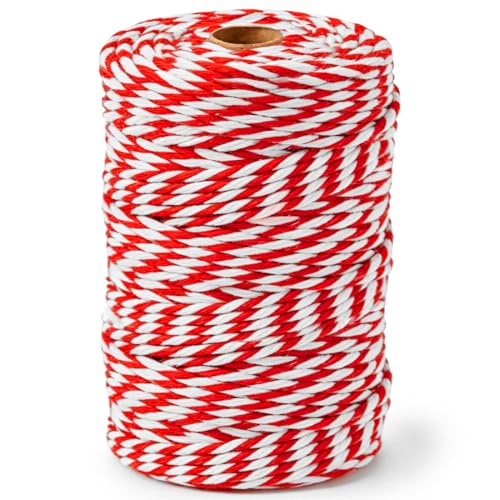
Should you want a dependable all-purpose twine that’s gentle on gifts but tough enough for the kitchen, SMART&CASUAL Cotton Bakers Twine 700ft in red and white is a smart pick. You’ll appreciate its natural cotton feel that stays soft yet holds firm for trussing meat and tying packages. It’s odor free and breathes, so food stays fresh. The 700 feet coil unwinds smoothly, cuts cleanly, and keeps the rest neat for later. Use it for baking, crafts, gardening, and favors. Support is ready in case you need help, so you can buy with confidence.
Best For: home cooks, bakers, crafters, and gift-givers who want a soft, food-safe, and versatile twine that’s strong enough for trussing and attractive for packaging.
Pros:
- Natural cotton construction is soft, breathable, and odor-free-safe for food use.
- Long 700 ft coil unwinds smoothly and stores neatly, reducing waste and frequent replacements.
- Versatile for cooking, gift wrapping, crafts, gardening, and general household tasks.
Cons:
- Single-color pattern (red & white) may not suit every aesthetic or project.
- Cotton twine is less weather-resistant and can weaken if left wet outdoors.
- Not as strong as synthetic cord for very heavy-duty or industrial tasks.
GoodCook Everyday Cotton Twine

In case you want a simple, reliable kitchen twine that’s food-safe and easy to use, GoodCook Everyday Cotton Twine is a solid choice for home cooks who value convenience and safety. You’ll get 75 feet of unbleached natural cotton that’s light and soft to handle. It’s oven safe whenever used away from the broiler and open flame, so you can truss poultry, bind roasts, tie herbs for drying, or wrap gifts. The roll includes a built-in cutting notch so you won’t need scissors. Use it once, then discard as recommended. GoodCook has made practical tools for home cooks for decades.
Best For: Home cooks and crafters who need an affordable, food-safe, easy-to-use cotton twine for trussing, tying herbs, baking, and light household tasks.
Pros:
- Food- and oven-safe (when kept away from broiler and open flame) and made from 100% unbleached natural cotton.
- 75-foot roll with integrated cutting notch eliminates the need for scissors and is convenient for quick use.
- Lightweight, soft, and versatile for cooking, baking, drying herbs, crafting, and gift wrapping.
Cons:
- Intended for single-use only and must be discarded after use, which may be wasteful for frequent users.
- Not safe for broiler use or direct exposure to open flame, limiting some high-heat applications.
- Thin/lightweight (Garden Line, light classification) may not be suitable for very heavy or large roasts.
Green Bakers Twine Cotton String 2mm, 656ft

Should you love baking, crafting, or just need reliable kitchen string, this green bakers twine is the pick for you. You’ll get two neat rolls of 100% food grade cotton, each twisted into a sturdy 2 mm, 2 ply cord that feels soft in your hands. It’s long at 656 feet, so you won’t run out while tying roasts, bundling herbs, wrapping gifts, or hanging photos. The bright green adds charm to packages and crafts. It cuts easily, holds knots well, and gives good strength for gardening, crocheting, and DIY projects. Replacement is guaranteed provided quality fails.
Best For: home cooks, bakers, crafters, and DIYers who need a food-safe, durable, and colorful twine for tying roasts, gift wrapping, and general household projects.
Pros:
- 100% food-grade cotton, safe for cooking tasks like trussing poultry and bundling herbs.
- Long length (656 ft across two rolls) and good strength provide great value and fewer replacements.
- Soft, bright green 2 mm, 2-ply construction that knots well and works nicely for crafts and gardening.
Cons:
- Limited to a single color (green), which may not suit all aesthetic preferences.
- Thicker 2 mm diameter may be too bulky for very delicate craftwork or fine tying.
- Cotton can absorb moisture and stain when used with wet or greasy foods, requiring cleaning or replacement.
Butchers Cotton Twine 24-PLY Ball

Should you want a butcher’s twine that feels sturdy in your hands and won’t let you down while trussing a roast or finishing a craft, the Butchers Cotton Twine 24-PLY Ball is made for you. You’ll notice its 24-ply construction feels firm yet forgiving. It’s 100% premium American cotton, white, and comes as a 3 inch round ball with 375 feet of length. You can trust it for trussing, roasting, tying bundles, or detailed craft work. It arrives individually shrink-wrapped for cleanliness, is made in America, and includes manufacturer warranty details and a voluntary 30-day return option.
Best For: Home cooks and crafters who need a durable, food-safe 24-ply cotton twine for trussing roasts, tying bundles, or detailed craft work.
Pros:
- Strong 24-ply premium American cotton construction provides durability and a secure hold.
- Long 375-foot length in a compact 3″ ball offers good value and convenience.
- Arrives individually shrink-wrapped for cleanliness and is made in the USA.
Cons:
- White color may show stains quickly during heavy kitchen use.
- Heavier 24-ply thickness may be too bulky for very fine, delicate craft tasks.
- No clear information on heat-resistance rating for high-temperature cooking beyond typical butcher’s twine usage.
Anvin Cotton Jute Twine Pack (3, Black/White)
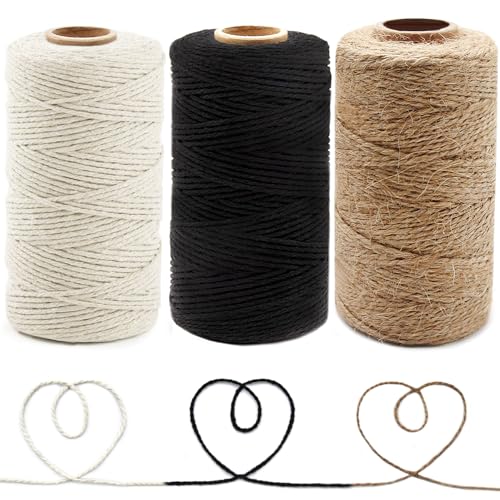
Should you want a tidy, reliable twine set that handles both crafts and kitchen tasks, the Anvin Cotton Jute Twine Pack (3, Black/White) is a smart pick because it gives you three colors and almost 1,000 feet of strong, 100% cotton cord that won’t fray while you work. You get three 328 foot rolls in black, white, and natural jute. Each 2 mm, 10 ply strand feels heavy duty and resists breaking. You’ll like the coils for neat storage and easy unrolling that cuts down tangles. Use it for gift wrap, tags, hanging ornaments, trussing meat, baking, gardening, and crafts. A one year warranty backs quality.
Best For: crafters, bakers, and home cooks who need a tidy, durable cotton twine set in multiple colors for gift wrapping, kitchen use, and DIY projects.
Pros:
- Three 328-ft rolls (black, white, natural) provide nearly 1,000 ft total for long-term use.
- 2 mm, 10-ply 100% cotton construction is heavy-duty, durable, and resists breaking or fraying.
- Coiled packaging allows neat storage and easy unrolling to minimize tangles; one-year quality warranty.
Cons:
- Cotton twine may weaken if left constantly wet or used for heavy outdoor loads over time.
- 2 mm thickness may be too thin for very heavy-duty or industrial tying tasks.
- No individual roll labels for quick color/length identification in some packs.
Butcher’s Twine 400ft Natural Cotton Cooking & Baking
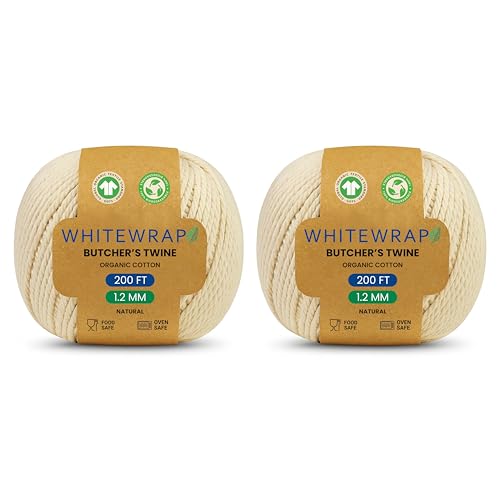
Should you want dependable twine that works in the kitchen and beyond, this 400 foot natural cotton butcher’s twine is a great pick for home cooks, bakers, and crafters who need a single reliable spool. You’ll find 400 feet at 1.2 mm thickness gives plenty of length for trussing poultry, tying roasts, and bundling meat for storage. It’s food safe and oven safe, yet soft and durable so knots hold without cutting into food. Bakers will like neat bows on bread and cakes, while crafters use it for wrapping gifts, hanging plants, and party decor. You can cut, knot, and store it easily.
Best For: home cooks, bakers, and crafters needing a long, food‑safe, oven‑safe, and versatile cotton twine for trussing, baking, and DIY projects.
Pros:
- 400 ft length at 1.2 mm provides plenty of durable, flexible twine for multiple uses.
- Food‑safe and oven‑safe-suitable for trussing poultry, tying roasts, and baking.
- Soft yet strong so knots hold without cutting into food; also handy for crafts and gift wrapping.
Cons:
- Natural cotton may stain or retain odors when used with strongly seasoned or greasy foods.
- Not as visually distinctive as colored baker’s twine for decorative projects.
- Single strand thickness may be insufficient for very heavy-duty bundling or outdoor long‑term use.
Factors to Consider When Choosing Cotton Twine
While you’re selecting cotton twine, consider the material and fiber type initially because that determines softness, strength, and whether it’s food safe. Next check strength and ply count along with thickness and diameter so your twine holds knots and fits the task. Also compare length per roll and any food safety rating to make sure you won’t run out and can use it safely in the kitchen.
Material & Fiber Type
Comfort matters a lot with cotton twine, and picking the right material and fiber type makes your projects work better and feel safer. You’ll want 100% natural cotton for softness, breathability, and food-safe contact while cooking or baking. Choose undyed or naturally colored cotton to avoid chemical residues and color transfer, especially with food or fabric crafts.
Pay attention to construction next, since single-ply, multi-ply, twisted, and braided options behave differently. Multi-ply twisted cotton resists fraying and handles strain better. Also check for food-grade or oven-safe labeling during trussing or roasting so the twine withstands typical oven temperatures but not direct flame. Finally, compare thickness options to match feel and durability to the task at hand.
Strength & Ply Count
Should you need cotton twine that will actually hold up under pressure, pay close attention to ply count and strength because they determine how much weight and wear the twine can take. Ply count tells you how many strands are twisted together; higher ply like 10 to 24 ply gives greater tensile strength and durability. Fiber quality matters too, so a 24 ply of good cotton will beat a low quality 3 ply. Thicker twine usually means higher ply and more strength, so match twine to the load you’ll secure. For kitchen use, pick a ply that holds roasts without cutting into meat yet stays flexible for knots. Observe handling differences: high ply is stiffer with less stretch and less fraying, low ply is softer and easier to manipulate.
Length Per Roll
You’ve just figured out how ply and strength affect performance, and now you’ll want to contemplate how much twine you actually get per roll. Reflect on the feet or meters you use most often. For short craft jobs, small rolls save space and cut waste. For kitchen tasks you repeat, larger rolls mean fewer interruptions and lower cost per foot. Also match roll length to your storage and shelf-life. Longer rolls take more room and can degrade if stored too long or poorly, so plan where you’ll keep them. Buying many colors or thicknesses? Add combined lengths to plan projects and inventory. Finally, check expected cut lengths against roll length to estimate how many items you can tie before you need replacements.
Food Safety Rating
Whenever you’re picking cotton twine for anything that touches food, consider food safety initially, because a wrong choice can ruin a meal or make someone sick. You should choose twine labeled food‑grade or food‑safe so dyes and fibers won’t leach into your roast or baked goods. Prefer undyed or natural cotton for direct contact, especially on moist or fatty surfaces, to avoid dye transfer. Verify oven safety and heat limits since many cotton twines handle roasting but will char near broilers or open flame. Check manufacturer guidance on single use versus reusable status and follow washing or sanitization instructions. Also confirm the twine has no chemical treatments like coatings or mold inhibitors that could migrate into food during cooking.
Thickness & Diameter
Although thickness might seem like a small detail, it actually changes how cotton twine performs for cooking, crafts, and heavy jobs, so you’ll want to pick the right diameter for the task. Consider what you tie most often. In case you roast large joints or bundle many items, choose twine 2 mm or thicker for strength and resistance to charring in the oven. For delicate jobs like gift wrap, bakery decoration, or tying herbs, use thinner twine around 1 to 1.2 mm so it stays flexible and won’t cut into soft items. Check ply count since higher ply usually means thicker, stronger cord. Also balance knot security and handling: very thin twine can slip or fray, while very thick twine can be hard to cinch neatly.
Packaging & Dispensing
You picked the right diameter and now you’ll want packaging that makes the twine easy to use every day. Choose twine wound on a neat coil or ball so it won’t tangle and you can pull precise lengths. Look for rolls with an integrated cutting notch or built in dispenser so you can cut singlehanded without hunting for scissors. Check roll length and diameter next; longer rolls mean fewer refills while compact diameters fit small tabletop dispensers. Prefer resealable or shrink wrapped packaging to keep unused twine clean and dry in your pantry or workshop. Should you plan food tasks, make sure the package lists clear handling and oven safety instructions. These features work together to save time and reduce frustration.
Ease Of Use
Ever wonder why some cotton twine makes tasks feel easy while other twine slows you down? You’ll notice thinner twine, around 1 to 2 mm, feeds smoothly for delicate jobs like gift wrapping and won’t fight your fingers. Soft, pliable cotton knots tightly and forms neat bows without kinking or fraying, so you’ll feel confident tying finishes. Pay attention to how the twine is wound. A neat coil or ball reduces tangles and saves time, and packaging that unwinds smoothly keeps your flow steady. Look for rolls with lots of length so you won’t replace spools often during big projects. Pre cuttable lengths or built in notches speed repetitive work and remove the need for scissors, improving your workflow and mood.
Intended Applications
Upon selecting cotton twine for a specific job, consider what you’ll actually do with it and pick the size, strength, and finish to match that task. Match length and thickness to need: thicker, higher ply for trussing large roasts or bundling firewood, thinner for gift wrap and light crafts. Should the twine touch food or go in the oven, pick food safe, oven safe cotton and avoid broiler or open flame unless rated. For outdoor and gardening tasks, choose tightly twisted, durable cotton that resists fraying and holds plants or bundles securely. For decorative work, prioritize color, softness, and pliability so knots and bows look neat and won’t cut paper. In case kitchen convenience matters, buy twine on a coil or ball to reduce tangles and waste.
Frequently Asked Questions
Is Cotton Twine Safe for Dye Transfer Onto Food?
Yes - cotton twine can transfer dye onto food provided it’s dyed poorly; you should use undyed or food-safe labeled twine, rinse and test initially, and avoid chemically treated or brightly colored cords near edible items.
Can Cotton Twine Be Used for Outdoor Gardening Long-Term?
Yes - you can use cotton twine outdoors long-term, but it’ll degrade faster from moisture, UV and rot; you should expect weakening, replace it periodically, or treat it with protective sealant or choose synthetic alternatives for longer-lasting support.
How Recyclable or Compostable Is Cotton Twine Packaging?
About 90% of textile waste can be composted provided natural fibers are separated; you’ll find cotton twine packaging is largely compostable and recyclable once uncoated, but you’ll need to remove any plastic, dyes, or metal fasteners initially.
Does Cotton Twine Harbor Bacteria After Extended Food Contact?
Yes - cotton twine can harbor bacteria after extended food contact, especially in case it stays damp or soiled; you should replace or sanitize it regularly, dry it thoroughly, and avoid reusing twine that contacted raw foods.
Can You Machine-Wash Items Tied With Cotton Twine?
Like a trusted shoelace, you can machine-wash items tied with cotton twine, but you should secure knots, use gentle cycles and cold water, and air-dry to prevent shrinking, fraying, or loosening over repeated washes.
