

You want drape, you want polish, you want a kimono you’ll actually wear. The right pattern helps you balance ease with clean finishing, whether you’re after a cropped jacket with lace trim or a full-length robe with contrast bands. You’ll also want sizing that feels inclusive and instructions that don’t slow you down. Up next, you’ll see which six patterns earn their spot-and which details make each one worth your time.
Simplicity 1318 Women’s Kimono Jacket Sewing Pattern

Simplicity 1318 is a strong pick should you want one pattern that carries your wardrobe across sizes and styles: it includes four women’s kimono jacket variations with clear measurement guides for XXS through XXL. You’ll sew a classic kimono with contrast bands, a cropped version finished with lace trim, or a draped high-low hem design with contrast-banded front and cuffs. The options look current, but they’re easy to mix into everyday outfits. You also get detailed instructions in English and Spanish, so you won’t stall mid-step. Best of all, it’s made in the USA.
Best For: Sewists who want one made-in-USA pattern with multiple on-trend kimono jacket variations and inclusive sizing (XXS–XXL), plus bilingual (English/Spanish) instructions.
Pros:
- Includes four distinct kimono jacket variations (contrast bands, cropped lace trim, draped high-low hem)
- Clear measurement guides for sizes XXS through XXL
- Detailed instructions in both English and Spanish; made in the USA
Cons:
- Focused specifically on kimono-style jackets, so it’s not ideal if you want other garment types
- Style options are limited to the four included variations
- Lace-trim and contrast-banding finishes may require extra materials/coordination beyond basic fabric
McCall’s Patterns M7270 Kimono Top, Skirt, OBI & Belt, AX5 (4-6-8-10-12)
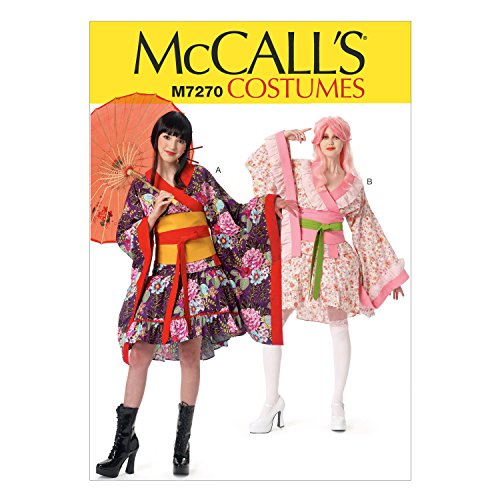
Designed for sewists who want a coordinated, kimono-inspired outfit in one envelope, McCall’s Patterns M7270 (AX5, sizes 4–12) lets you stitch a loose wrap top, elastic-waist skirt options, and a self-lined obi with a bow and Velcro closure-plus a tie belt to finish the look. You’ll sew the top with bands, applied sidebands, and a narrow hem, then choose skirts with high-low hems, ruffles, or an attached petticoat (netting ruffles). Variation B uses ruffles; A pairs with purchased trim. Cotton blends work well; Georgette suits contrast. Plan elastic, snaps, interfacing, and Velcro.
Best For: Sewists (sizes 4–12) who want an all-in-one pattern to make a coordinated kimono-style wrap top, skirt options, and an obi/belt set with a polished, traditional-inspired look.
Pros:
- Includes multiple coordinated pieces (top, skirt variations, obi, and tie belt) in one pattern envelope
- Detailed instructions with design options like ruffles vs. purchased trim and an attached petticoat with netting ruffles
- Works well with accessible fabrics like cotton and cotton blends (with Georgette as a contrast option)
Cons:
- Requires several notions (elastic, Velcro, interfacing, snaps, trim), which can add cost and prep time
- Some skirt styles show the wrong side and use netting ruffles/petticoat construction, which may be fiddly for beginners
- Not suitable for obvious diagonal fabrics, limiting fabric choices for certain prints/weaves
Simplicity US1108A Kimono and Cardigan Pattern Kit

In case you want one pattern kit that covers multiple kimono vibes-from relaxed drape to sleek, straight lines-the US1108A set fits the bill for women who like options without hunting for separate patterns. You’ll get sewing templates, pattern pieces, fabric recommendations, sizing guides, and step-by-step instructions. Choose a draped kimono in short or long length with contrast bands, sew a straight floor-length kimono for clean drama, or make a short cardigan with optional trim. With sizes from XXS through XXL, you can dial in fit. Instructions come in English, Spanish, and French, and it’s produced in the USA.
Best For: Sewists who want one women’s pattern kit with multiple kimono/cardigan style options and inclusive sizing from XXS–XXL.
Pros:
- Includes four wearable styles (draped short/long kimono, straight floor-length kimono, short cardigan with optional trim)
- Broad size range (XXS through XXL) with sizing guides to help dial in fit
- Multilingual instructions (English, Spanish, French) and made in the USA
Cons:
- Only covers kimono/cardigan silhouettes (not a variety of other garment types)
- Fabric must be purchased separately despite fabric recommendations being included
- May feel repetitive if you only want one specific kimono style rather than multiple variations
Butterick Sewing Pattern 6698 Adult Kimono, Obi & Sash

Butterick Sewing Pattern 6698 suits you best in case you want a full adult kimono set from one envelope-robe, obi, and sash-with clear, self-construction instructions and pieces included. You’ll sew from the included pattern pieces, but you won’t get a finished garment. It covers adult sizes XS through XL, so you can fit yourself without hunting extra drafts. Because it’s rare and out of print (2001), you’ll likely need to search resale listings. The envelope is compact (8.35 x 5.59 x 1.14 inches) and light (5 ounces), with mixed feedback averaging about 3.7/5.
Best For: Sewists who want a single-envelope adult kimono set (robe, obi, and sash) in sizes XS–XL and are comfortable tracking down a rare, out-of-print pattern.
Pros:
- Includes pattern pieces and instructions for robe, obi, and sash
- Covers a wide adult size range (XS–XL)
- Compact, lightweight envelope for easy storage (8.35 x 5.59 x 1.14 in; 5 oz)
Cons:
- Pattern only-no finished garment included
- Rare/out of print (2001), so availability often depends on resale listings
- Mixed customer feedback (about 3.7/5 from 5 reviews)
Simplicity 8172 Misses’ Kimono Sewing Pattern (XXS-XXL)

Simplicity 8172 works best for you in case you want a beginner-friendly kimono jacket pattern that still lets you personalize the finish. You’ll get an Easy to Sew kit with templates, pattern pieces, fabric suggestions, sizing guides, and clear instructions for four jacket styles in multiple lengths.
You can add fringe, lace, ruffles, or flounces, or mix contrasting fabrics and per-the-yard trims for a custom look. Sizes run from XXS through XXL, and the packet includes English and Spanish fit guidance. It’s made in the USA, ships as a paper pattern, and includes warranty support.
Best For: Beginner sewists who want an easy-to-follow kimono jacket pattern with multiple style options and customizable trims in sizes XXS–XXL.
Pros:
- Includes templates, pattern pieces, fabric recommendations, sizing guides, and instructions for four kimono styles
- Beginner-friendly construction with clear guidance (English and Spanish)
- Customizable finish with options for fringe, lace, ruffles/flounces, contrasting fabrics, and by-the-yard trims
Cons:
- Physical paper pattern only (not a digital download)
- Trims and contrast fabrics are not included and add extra cost
- Misses sizing range (XXS–XXL) may not fit all body types without adjustments
New Look 6378 Misses’ Easy Kimono Sewing Pattern Size A

New Look 6378 Misses’ Easy Kimono Sewing Pattern Size A suits you best if you want one pattern that delivers several wearable kimono styles without fuss. You can sew a long high-low kimono, a short kimono with half sleeves, a cropped version with a fringe hem, or a floor-length kimono vest. Size A spans XS through XL, so you can fit and grade without hunting for another envelope. You’ll get a physical cardboard-and-paper pattern made in the USA through CSS Industries, Inc., with bilingual instructions in English and Spanish. It’s lightweight, compact, and still in production.
Best For: Sewists who want a single, easy-to-use pattern with multiple kimono variations and inclusive sizing from XS to XL.
Pros:
- Includes several wearable options (long high-low, short half-sleeve, cropped fringe hem, and floor-length vest) in one pattern
- Size A covers XS–XL for flexible fitting and grading
- Bilingual instructions in English and Spanish; made in the USA
Cons:
- Physical paper/cardboard pattern only (no digital download option)
- Requires sourcing your own fabric and sewing supplies (pattern only)
- Style range is limited to kimono silhouettes rather than broader garment types
Factors to Consider When Choosing Kimono Sewing Patterns
Once you’re choosing kimono sewing patterns, start from checking the size range and fit so you’ll get the silhouette you want. Compare the style variations offered, match the design to your skill level, and confirm the recommended fabric and notions will work with what you have. In case you’re using a pattern from another brand or region, make sure you can follow the instruction language options before you cut.
Size Range And Fit
Although kimono silhouettes often look forgiving, you’ll get a far better result assuming the pattern’s size range and fit options match your measurements and styling goals. Check whether the pattern spans from XXS to XXL (or includes misses and plus-size blocks) so you’re not grading heavily and distorting proportions. Rely on all-inclusive sizing guides: measure bust, waist, hip, and finished garment ease, then choose the size that matches your intended drape. Look for pattern kits that bundle multiple size intervals, since they let you tweak fit for different bodies or layering. Adjustable elements such as wrap closures or elasticized waistbands help you fine-tune comfort without complex alterations. In case instructions come in multiple languages, use their measurement charts and fitting tips for accuracy.
Style Variations Offered
Since one kimono pattern can cover several looks, check the style variations offered before you commit. Look for multiple lengths-cropped, short, mid-length, or floor-length-so you can dress it up or down and wear it across seasons. In case you want a statement piece, choose patterns that include contrast bands, lace trim, fringe, ruffles, or flounces, letting you shift from minimal to ornate without switching patterns. For extra movement, consider options with draped hems or high-low cuts that create asymmetry and a flowy silhouette. Many designs also include obi belts, sashes, or tie belts, so you can define your waist whenever you want. Some even add cardigan or shrug variations for versatile layering, too.
Skill Level Required
Style options matter, but your pattern also has to match what you can comfortably sew. Kimono patterns range from true beginner builds that rely on straight seams and basic finishing to advanced versions that ask you to insert contrast bands or apply lace trims cleanly. In case you’re new to garment sewing, look for patterns labeled “easy to sew” since they usually include simplified construction plus thorough, step-by-step instructions. You’ll also sew more accurately whenever the pattern offers clear measurement guides and multilingual directions. Should you be considering a kit with multiple variations, expect intermediate work like draped hems, applied sidebands, or a multi-piece obi belt with closures. Before you commit, assess your comfort with elastic, snaps, or interfacing.
Fabric And Notions
Fabric and notions act as the backbone of any kimono pattern, shaping how it hangs, feels, and holds up in wear. Start off matching fabric to the design’s intent: cotton and cotton blends give crisp comfort, while Georgette delivers a lighter, fluid drape. Check whether the pattern expects moderate or two-way stretch, because the wrong stretch level can change fit, ease, and sleeve behavior.
Choose interfacing that supports key areas without stiffness; craft-weight or sew-in options help collars, bands, and fronts keep clean lines. Stock the notions your variation needs-elastic for gathered waists, Velcro or snaps for secure closures, plus trims, braids, or bindings for authentic finishing. Add a lining whenever the fabric is sheer or clingy, and pick compatible petticoat or trim fabrics for a polished hem.
Instruction Language Options
During the moment you’re choosing a kimono sewing pattern, how easily can you follow the instructions in the language you know best? Many kimono patterns default to English, but some include Spanish, French, or other options. In case you’re not fully comfortable in English, multilingual instructions make each step clearer and more approachable, especially at times when terms like seam allowance, facing, and hem appear.
You’ll save time and avoid mistakes once you can read detailed guidance in your preferred language, instead of guessing or translating on the fly. Bilingual or multilingual directions also help provided that you’re a beginner who needs simpler explanations and supportive visuals in your native language. At times a brand offers multiple languages, it often signals wider market reach and a real commitment to international sewists.
Pattern Format And Quality
Once you can read the instructions comfortably, look closely at the pattern’s format and general build quality, since those details shape how accurately you’ll cut and sew your kimono. Choose patterns with clearly printed templates and full-size pieces that don’t distort whenever you trace or pin; heavy paper or cardboard holds up through repeat use and keeps edges crisp. Check whether the pattern was produced domestically, because consistent manufacturing standards often mean cleaner lines, better alignment marks, and fewer printing quirks. You’ll also want an all-inclusive sizing guide that spans a wide range, so you can pick the right size and make adjustments with confidence. Finally, consider packaging size and weight: bulkier, heavier sets often signal more instructions, options, and included variations in general.
Frequently Asked Questions
How Do I Prewash Delicate Fabrics Without Ruining Drape?
Like a whispered sonnet, you’ll hand-wash in cool water with gentle detergent, don’t wring. You’ll roll in a towel, press out moisture, then dry flat or hang briefly. You’ll test scraps initially.
What Seam Finishes Prevent Fraying on Lightweight Rayon or Silk?
Use French seams, narrow rolled hems, or bias-bound seams to stop fraying on rayon or silk. You can also serge with fine thread. Test initially, press gently, and trim close to reduce bulk.
Can I Convert a Kimono Pattern Into a Reversible Jacket?
Yes, you can convert a kimono pattern into a reversible jacket. You’ll duplicate pieces, sew two layers right-sides together, understitch edges, bag the lining, and topstitch. Skip bulky seams; use French or bias-bound finishes.
How Do I Adjust Sleeve Length Without Altering Armhole Fit?
Shorten or lengthen at the sleeve’s lengthen/shorten line, not at the cap. You’ll slash and spread or overlap evenly, then true side seams and hem. Keep the sleeve cap unchanged, and you’ll preserve armhole fit.
What’s the Best Way to Store Kimonos to Prevent Wrinkles?
Absolutely essential: you’ll prevent wrinkles through hanging kimonos on wide, padded hangers and letting sleeves drape freely. You’ll avoid tight folding, use breathable garment bags, and steam lightly before wear. Keep closets uncrowded, too.
