

Some fabrics prefer a little help to look their best. You’ll want the right interfacing to give collars, hems, and bags structure without bulk. I’ll walk you through six dependable options, how to match weight and adhesive type to your fabric, and quick testing and fusing tips-so you can pick confidently and avoid surprises at the iron.
| Lightweight Fusible Sewing Interfacing Non-Woven Stabilizer |

| Lightweight Stabilizer | Type: Fusible, non-woven interfacing (double-sided fusible / sew-in stabilizer) | Application method: Iron to fuse (can be sewn between layers) | Weight category: Lightweight | CHECK LATEST PRICE | Read Our Analysis |
| HeatnBond Lightweight Fusible Interfacing 15″ x 3yd |

| Quilting & Apparel Pick | Type: Fusible, ultra-lightweight non-woven interfacing (one-sided) | Application method: Iron-on fusible (bond with household iron) | Weight category: Ultra lightweight / lightweight | CHECK LATEST PRICE | Read Our Analysis |
| 12″ x 30yd Fusible Iron-On Nonwoven Interfacing |

| Best for Bulk-Free Finish | Type: Fusible, non-woven polyester interfacing (one-sided) | Application method: Iron-on (apply shiny adhesive side to fabric, cover when ironing) | Weight category: Light weight / thin | CHECK LATEST PRICE | Read Our Analysis |
| Fusible Iron-On Non-Woven Interfacing Fabric (White/Black) |

| Dual-Color Versatile | Type: Fusible, non-woven interfacing (single-sided) | Application method: Iron-on activation (trim and bond with iron) | Weight category: Lightweight | CHECK LATEST PRICE | Read Our Analysis |
| HTVRONT Medium Weight Fusible Iron-On Interfacing Fabric |
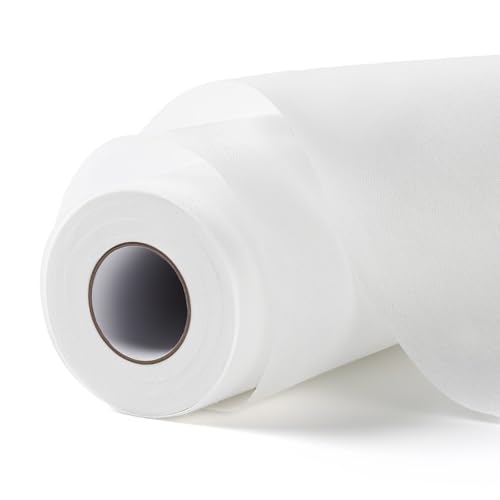
| Medium-Weight Support | Type: Fusible, non-woven polyester interfacing (single-sided, medium weight) | Application method: Iron-on with hot cloth/cotton cover (follow heat/time) | Weight category: Medium weight | CHECK LATEST PRICE | Read Our Analysis |
| Phinus Medium-Weight Fusible Interfacing (11.8in x 15yd) |

| Reliable Everyday Interfacing | Type: Fusible, medium-weight polyester non-woven interfacing (single-sided) | Application method: Iron-on (adhesive side to fabric; cover with cotton when ironing) | Weight category: Medium-weight (thin, minimal bulk) | CHECK LATEST PRICE | Read Our Analysis |
More Details on Our Top Picks
Lightweight Fusible Sewing Interfacing Non-Woven Stabilizer
Should you want a lightweight, versatile stabilizer that fuses quickly and won’t bulk your seams, this fusible non‑woven interfacing is a smart choice-it’s designed for sewists who need crisp collars, neat facings, and subtle structure without stiffness. You’ll get a double-sided fusible web in a 150 cm × 200 cm folded ziplock pack, easy to transport and store. The non-woven fabric stabilizes and protects stitching, so collars and facings hold shape without becoming stiff. Sew it between layers before stitching, then iron to fuse, taking care not to press the iron directly onto the interfacing surface.
- Type:Fusible, non-woven interfacing (double-sided fusible / sew-in stabilizer)
- Application method:Iron to fuse (can be sewn between layers)
- Weight category:Lightweight
- Suitable uses:Collars, facings, general sewing stabilization
- Washability / durability:Implied durable for sewing (no explicit wash instructions)
- Size / packaging format:150 cm × 200 cm, folded in ziplock package
- Additional Feature:Double-sided fusible
- Additional Feature:Packaged folded in ziplock
- Additional Feature:Sew-in stabilizer option
HeatnBond Lightweight Fusible Interfacing 15″ x 3yd
Should you want ultra-light support that preserves fabric drape, HeatnBond Lightweight Fusible Interfacing is a smart choice-its non-woven, one-sided fusible construction adds stability to blouses, dresses, collars, and delicate quilting without stiffening the garment. You’ll find it ideal for shirts, cuffs, plackets, button bands, appliqués, and fabric crafts. The pre-cut 15″ x 3 yd roll fits small and multiple projects. It bonds with a household iron, shows minimal shrinkage, and keeps shape after laundering. Machine washable and dry cleanable, it’s durable for repeated care. Made in the USA, it delivers consistent, trusted performance.
- Type:Fusible, ultra-lightweight non-woven interfacing (one-sided)
- Application method:Iron-on fusible (bond with household iron)
- Weight category:Ultra lightweight / lightweight
- Suitable uses:Blouses, shirts, dresses, collars, cuffs, quilting, appliqué, crafts
- Washability / durability:Machine washable and dry cleanable; minimal shrinkage
- Size / packaging format:15 in × 3 yd, pre-cut roll
- Additional Feature:Made in USA
- Additional Feature:Minimal shrinkage
- Additional Feature:Pre-cut roll
12″ x 30yd Fusible Iron-On Nonwoven Interfacing
Should you want a lightweight, low-profile fusible that won’t add bulk to delicate fabrics, this 12″ x 30 yd nonwoven interfacing makes a smart choice. You’ll get single-sided, iron-on polyester that’s thin yet reinforces stitching, collars, facings, and seams without showing through. Apply with the adhesive (shiny) side down on the wrong side of fabric, cover with a cotton cloth, and fuse with a hot iron to avoid direct heat. It’s ideal for light to medium-weight materials like voile, broadcloth, knits, and linen, and suits quilting, handbags, blouses, and larger garment projects-trim to fit smaller patterns.
- Type:Fusible, non-woven polyester interfacing (one-sided)
- Application method:Iron-on (apply shiny adhesive side to fabric, cover when ironing)
- Weight category:Light weight / thin
- Suitable uses:Collars, cuffs, pockets, waistbands, quilting, garments, crafts
- Washability / durability:Polyester construction - durable; follow heat cover instruction (wash guidance implied)
- Size / packaging format:12 in × 30 yd roll/package
- Additional Feature:Polyester material
- Additional Feature:Large 30-yard length
- Additional Feature:Model EWVFI-1
Fusible Iron-On Non-Woven Interfacing Fabric (White/Black)
Should you want a fuss-free, all-purpose interfacing that works from silk to denim, this fusible iron-on non-woven option is a smart choice-its lightweight, single-sided construction provides structure without stiffening your fabric, and the included white and black rolls let you match dark or light materials to avoid backing show-through. You get two pieces, each 11.6 inches across 15 yards, ideal for collars, cuffs, plackets, bags, quilting, curtains, and crafts. Trim, press, and bond quickly; it maintains drape, prevents wrinkles and stretching, and endures multiple washes without flaking or bubbling. Clear paper instructions make application straightforward.
- Type:Fusible, non-woven interfacing (single-sided)
- Application method:Iron-on activation (trim and bond with iron)
- Weight category:Lightweight
- Suitable uses:Garments (collars, cuffs, plackets), bags, quilting, home décor, crafts
- Washability / durability:Withstands multiple washes without flaking or bubbling
- Size / packaging format:Two pieces, 11.6 in × 15 yd each (white & black)
- Additional Feature:Includes white and black
- Additional Feature:Two-piece quantity
- Additional Feature:Paper instructions included
HTVRONT Medium Weight Fusible Iron-On Interfacing Fabric
In case you need a reliable, medium-weight fusible interfacing that adds structure without bulk, HTVRONT’s iron-on polyester is a smart choice for garment and accessory projects. You’ll get a 13 in × 22 yd roll of single-sided, non-woven polyester that’s 0.79 × 12.99 × 0.04 inches and weighs 13.4 oz. Its evenly distributed adhesive dots bond securely whenever you press with a hot cloth over the shiny side. It stabilizes collars, cuffs, pockets, handbags and light- to medium-weight fabrics without adding bulk, and it withstands multiple washes. Warranty and seller support are available via the manufacturer.
- Type:Fusible, non-woven polyester interfacing (single-sided, medium weight)
- Application method:Iron-on with hot cloth/cotton cover (follow heat/time)
- Weight category:Medium weight
- Suitable uses:Collars, trims, handbags, purses, belts, shirts, quilting, DIY
- Washability / durability:Retains structure after multiple washes; polyester machine washable (others hand wash recommended)
- Size / packaging format:13 in × 22 yd roll
- Additional Feature:Strong adhesive dots
- Additional Feature:Manufacturer warranty available
- Additional Feature:Long 22-yard length
Phinus Medium-Weight Fusible Interfacing (11.8in x 15yd)
In case you want a reliable, low-bulk interfacing that firm’s up collars, facings, and lightweight garments without burdening them down, Phinus Medium-Weight Fusible Interfacing is a smart choice. You’ll get a single-sided fusible with high-quality polyester construction that’s thin yet gives medium support. At 11.8 inches across 15 yards, it’s generous for medium-to-large projects and easy to trim for smaller pieces. It strengthens stitching and adds structure to collars, cuffs, waistbands, pockets, blouses, and light-to-medium fabrics like voile, broadcloth, knits, and linen. Fuse adhesive side to wrong side, cover with cotton cloth, and press-avoid direct heat.
- Type:Fusible, medium-weight polyester non-woven interfacing (single-sided)
- Application method:Iron-on (adhesive side to fabric; cover with cotton when ironing)
- Weight category:Medium-weight (thin, minimal bulk)
- Suitable uses:Collars, facings, waistbands, quilting, handbags, garments, crafts
- Washability / durability:Durable reinforcement; integrates invisibly (wash guidance implied)
- Size / packaging format:11.8 in × 15 yd package
- Additional Feature:High-quality polyester
- Additional Feature:Thin minimal-bulk design
- Additional Feature:Robust adhesive backing
Factors to Consider When Choosing Sewing Interfacings
At the point of choosing interfacing, you’ll want to match its weight to your fabric so the garment keeps its intended shape. Decide between fusible and sew‑in options based on convenience and how the adhesive type will affect feel and durability. Also consider breathability, drape, and the heat settings required so you don’t damage delicate materials.
Fabric Weight Match
Balance matters: pick an interfacing that matches or is slightly lighter than your fabric so you preserve drape and hand. Choose lightweight interfacings for sheers and blouses, medium for shirting and light-wool, and heavy for canvas or coat-weight fabrics. Don’t use something heavier than the fabric - it’ll stiffen, pucker, or distort seams and hems. Too light, and you’ll lose support and shape retention. Always test through fusing a small scrap: hold the sample up and compare drape, stretch recovery, and hand; should the fused piece hang noticeably stiffer, go lighter. Match interfacing type to garment area too - collars, cuffs, and waistbands often need firmer support than body panels. For knits, pick stretch-friendly fusible or a lightweight sew-in to preserve mobility.
Fusible Vs Sew-In
Decide whether you need the speed and smooth finish of fusible interfacing or the gentle, long-lasting support of sew-in-your choice will affect drape, durability, and how the garment is handled. Should you want quick application and neat interiors, use fusible: its adhesive bonds with heat and pressure, ideal for collars, facings, and medium-weight fabrics. Place adhesive side to the wrong side, use correct iron temperature and a press cloth to avoid scorching. Opt for sew-in for delicate, heat-sensitive, very heavy, or loosely woven fabrics; stitch it into seams or baste between layers so it won’t distort fibers. Sew-in usually preserves drape better and endures laundering longer because it’s mechanically attached. Base your choice on fabric type, required drape, and whether heat can be used.
Adhesive Strength Type
Often you’ll choose an interfacing via its adhesive strength, since that determines how the facing will behave under wear and cleaning. You’ll pick single-sided fusibles whenever bonding one layer, and double-sided whenever you need a sandwich for extra hold. Match adhesive weight to purpose: lightweight for delicate fabrics to keep drape, medium for everyday garments, heavy for belts, bag handles, and structured pieces. Consider how the adhesive is applied-continuous film gives the firmest, dot or web patterns reduce stiffness and preserve softer hand. Follow heat and timing instructions precisely; inadequate heat or time yields weak, spotty bonds and might require a protective press cloth. Finally, check laundering stability-some adhesives withstand washing and dry cleaning, while weaker ones can delaminate, shrink, or bubble.
Breathability And Drape
Because an interfacing can change how a garment feels and moves, you should match its breathability and drape to the fashion fabric and intended use. Breathability hinges on fiber and construction: woven or loosely non-woven interfacings let air pass, while dense fusible films and tightly bonded non-wovens restrict airflow. Drape follows weight and stiffness-lightweight, thin interfacings preserve fluidity; medium or heavy weights add structure and cut drape. Watch adhesive coverage: fusible films or heavy dot coatings can stiffen areas and reduce breathability and soft hand, so lower coverage often feels better. Match drape to fabric (light for chiffon, medium for shirting) and consider end use: collars or belts might trade breathability for shape, but facings and linings should stay low‑bulk and breathable.
Heat Application Guidelines
Choosing the right interfacing goes beyond breathability and drape - how you apply heat will determine whether it bonds properly and how the fabric looks and behaves afterward. Initially, confirm whether the interfacing is fusible on one or both sides and always place the adhesive (shiny) side against the wrong side of the fabric. Use a pressing cloth-damp or dry cotton-to protect adhesive and fabric; never let the iron touch the interfacing directly. Match iron temperature to fiber content: low for synthetics, medium for blends, high for cotton/linen, and test on a scrap to avoid scorching or adhesive bleed. Press with firm, even pressure for the recommended time (often 8–15 seconds for lightweight types), use short overlapping presses, let cool, and re-press any unbonded spots.
Washability And Care
Should you pick an interfacing, make sure its care instructions match how you’ll launder the garment-machine-washable fusibles suit everyday pieces, while dry-clean-only or hand-wash adhesives are safer for delicates and structured items. Check the interfacing label for temperature and solvent compatibility so the adhesive and fibers tolerate your garment’s recommended laundering. Prefer fusibles formulated to hold bonds through repeated wash and dry cycles to avoid bubbling, peeling, or loss of support. Test on a fabric scrap: apply per instructions, launder as intended, then inspect for shrinkage, stiffness change, color transfer, or delamination. Follow application precautions-correct iron temperature, press cloth, and adequate cooling time-because excessive heat or direct contact can weaken the bond or damage both interfacing and fabric, reducing longevity.
Color And Visibility
Care and color go hand in hand: even a perfectly washable interfacing will ruin a lightweight blouse should its color shows through. Choose interfacing color-white, black, or neutral/tan-to match or blend with your fabric or lining so it stays invisible under lightweight or semi-sheer materials. For dark fabrics, use black or dark-colored interfacing to prevent pale backing from peeking through after fusing or laundering. For light or sheer fabrics, pick very lightweight, color-matched, or sheer interfacing to preserve drape and avoid visible patches under bright light. Whenever stitching or trimming near edges, match the interfacing to the outer fabric to keep seam allowances from showing. Always test a fused swatch: adhesive color and opacity can change visibility under typical lighting.
