Address
304 North Cardinal
St. Dorchester Center, MA 02124
Work Hours
Monday to Friday: 7AM - 7PM
Weekend: 10AM - 5PM
Address
304 North Cardinal
St. Dorchester Center, MA 02124
Work Hours
Monday to Friday: 7AM - 7PM
Weekend: 10AM - 5PM

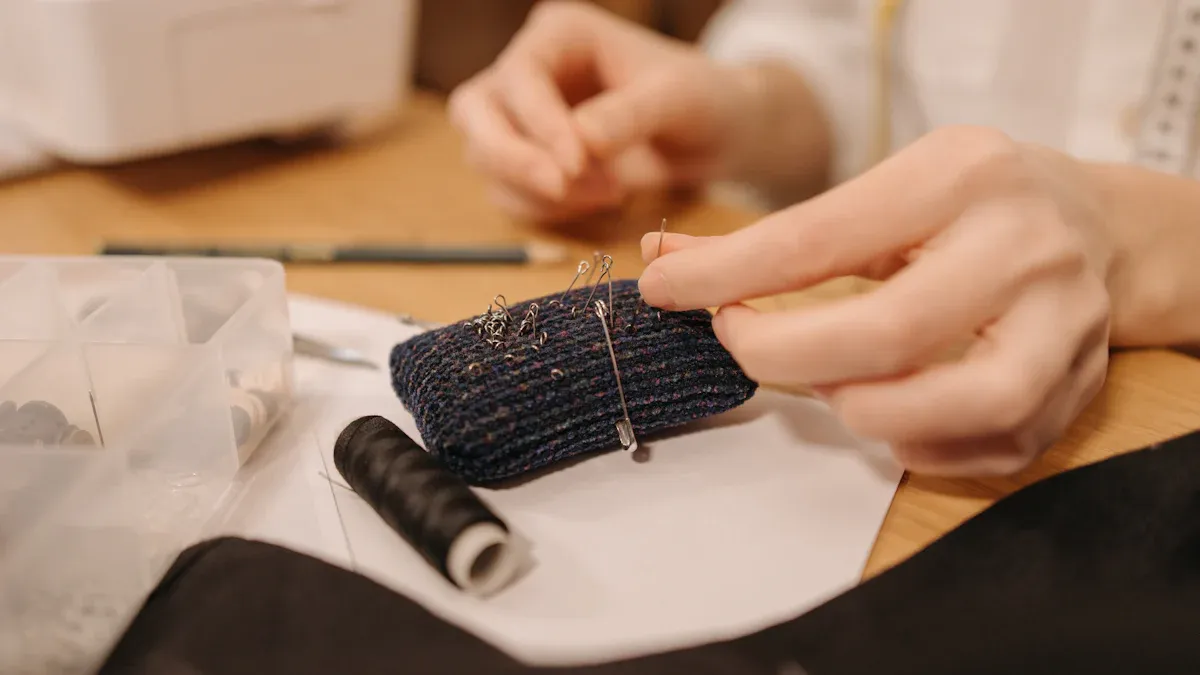
Sewing for beginners opens up a world of creative possibilities that can be both fun and rewarding! Imagine transforming simple fabric into beautiful creations. It’s not just about making clothes; you can craft home decor, gifts, and more. Plus, recent studies show that sewing can help reduce stress and boost your mental health. The focus it requires calms your mind and gives you a sense of accomplishment. So, if you’re ready to learn sewing for beginners, you’re in for an exciting journey!
Start your sewing journey with essential tools like a tape measure, quality scissors, and a seam ripper to ensure success.
Choose beginner-friendly fabrics such as sandwashed cotton and cotton jersey knit for easier handling and sewing.
Practice basic techniques like pinning, hemming, and sewing buttons to build confidence and skill.
Begin with simple projects like tote bags and fabric coasters to quickly gain experience and enjoy a sense of accomplishment.
Join online sewing communities for support, inspiration, and to share your progress with fellow beginners.
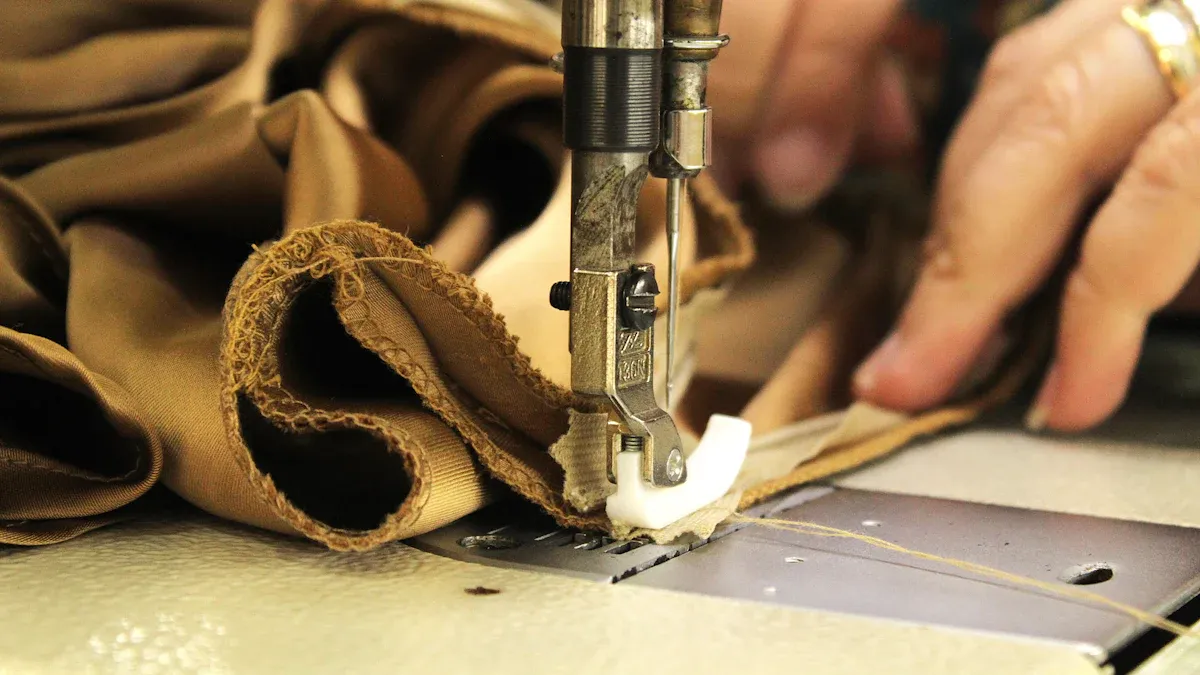
When you start sewing, having the right tools makes all the difference. Here’s a list of essential beginner sewing supplies you should consider:
Tape measure: This helps you take accurate measurements.
Marking pencil: Use this to mark your fabric without leaving permanent marks.
Quality fabric scissors: Invest in a good pair to ensure clean cuts.
Thread snips: These handy tools make it easy to trim threads quickly.
A cutting mat is also a great addition to your workspace. It protects your surfaces and ensures precision when cutting fabric. Fabric shears are crucial for cutting accurately, while pins help secure patterns to fabric during cutting and sewing. Don’t forget a seam ripper; it’s essential for correcting mistakes!
Choosing the right fabric can be overwhelming, but some types are easier for beginners. Here’s a quick table to help you understand which fabrics to start with:
Fabric Type | Characteristics | Advantages for Beginners |
|---|---|---|
Sandwashed Cotton | Super stable weave, 100% cotton, easy to press | Versatile for various projects, no pattern matching required, affordable |
Everyday Linen | Medium weight, 100% linen, moderate drape | Easy to cut, sew, and iron, suitable for a variety of makes |
Cotton Jersey Knit | Medium weight, stable, does not fray | Easy to cut, simple zig-zag stitch can finish seams, good for beginners trying knits |
Brushed Bull Denim | Medium weight, sturdy, soft feel | Easier to maneuver, suitable for workwear, available in various colors |
As a beginner, you might make some common mistakes when selecting fabric. For instance, always check the labels for fiber content and care instructions. Understanding the project needs is crucial, so ask about fabric weight and drape to ensure suitability.
Before diving into your first project, mastering some basic sewing techniques is essential. Here’s a list of skills every beginner should learn:
Learn to pin or clip
Cut fabric accurately
Do a hem
Use different seaming techniques
Turn corners
Sew a straight hand stitch
Sew on a button
Knot a thread
Insert a zipper
These techniques will build your confidence and prepare you for more complex projects. Remember, practice makes perfect, so don’t rush through these skills.
By following these sewing tips for beginners, you’ll set yourself up for success. With the right tools, fabric, and techniques, you’ll be well on your way to creating beautiful projects in no time!
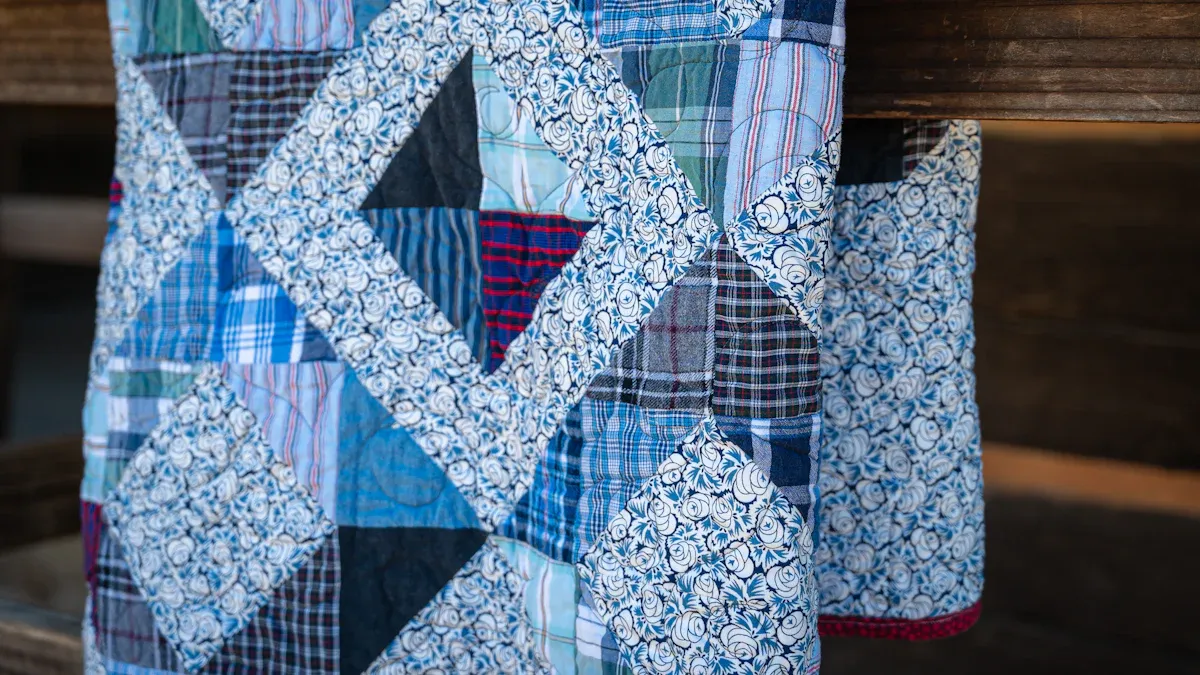
Starting your sewing journey with easy beginner projects can boost your confidence and creativity. Here are three fantastic projects that are simple to complete and perfect for beginners.
Tote bags are one of the best sewing projects for a beginner. They’re practical, stylish, and you can make them from various fabrics like linen, cotton, or canvas. Here’s why you should consider making a tote bag:
You can choose materials that you love, making the project more enjoyable.
The construction process is straightforward, helping you build confidence in your sewing skills.
Many clear instructions and tutorials are available online, making it easier for you to learn.
If you’re looking for a specific pattern, the ‘My First Tote’ pattern is designed for beginners. It emphasizes quick and easy construction, which is essential for cultivating your interest in sewing. Plus, you can use your tote bag for shopping, beach days, or as a gift!
Fabric coasters are another excellent choice for beginner sewing projects. They’re quick to make and allow you to practice essential sewing skills. Here’s what you can learn by making fabric coasters:
Basic sewing techniques: You’ll learn how to sew fabric pieces together using a sewing machine.
Fabric handling: You’ll understand how to choose and work with different types of fabric, such as cotton and batting.
Project planning: You’ll learn to follow a set of instructions to complete a sewing project from start to finish.
You can whip up a set of fabric coasters in under 10 minutes! Imagine completing a project in such a short time. A set of six coasters can take less than two hours to make, giving you a quick sense of accomplishment. Plus, they make great gifts or fun additions to your home decor.
Drawstring bags are a fantastic option for easy sewing projects. They’re versatile and can be used for various purposes. Here’s why you should try making one:
Feature | Description |
|---|---|
Fat Quarter Friendly | You can create a drawstring pouch using just one fat quarter and scraps. |
No Boxed Corners Needed | The design avoids complex techniques, making it easier for beginners. |
Quick to Sew | A pouch can be completed in under an hour, providing a quick sense of achievement. |
Beginner Friendly | Clear instructions and simple construction make it ideal for new sewers. |
You can use handmade drawstring bags for gift wrapping, storage for toys, or even as reusable gift bags. They’re not only practical but also a fun way to express your creativity!
By tackling these easy beginner projects, you’ll gain valuable skills and confidence in your sewing abilities. So grab your fabric and let’s get sewing!
Creating simple sewing projects for your home can be a fun way to personalize your space. Let’s explore three easy projects that will enhance your decor without breaking the bank!
Making pillow covers is a fantastic first project. They’re practical and can easily be washed when needed. Plus, you can tailor them to reflect your personal style. Here are some benefits of making pillow covers:
Benefit | Description |
|---|---|
Easy to Clean | You can toss them in the wash whenever they need freshening up. |
Learn Essential Techniques | You’ll practice turning corners, setting zippers, and grading seams. |
Personal Style | Choose fabrics that match your decor, adding a unique touch to your home. |
Table runners are another great project for beginners. They’re simple to sew and can transform your dining area. If you can sew four straight lines, you can make a table runner! Here are some easy patterns to consider:
Source | Description |
|---|---|
Easy Table Runner | A great beginner project. Make six placemats from just one yard of fabric! |
How to Make a Table Runner | DIY table runners are quick and satisfying. Perfect for both beginners and seasoned sewers! |
Cushion covers are perfect for adding comfort and style to your living space. They reinforce several sewing techniques, making them ideal for beginners. Here’s what you’ll learn while making them:
Fold the fabric in half with right sides together and pin away from the raw edge.
Stitch with a basting stitch and open out the seam allowance.
Lay the zipper right side down against the wrong side of the cushion cover and pin in place.
Top stitch the zipper in place, ensuring even distance from the seam.
Hand baste both ends of the cushion cover before stitching to avoid puckering.
You can choose from various fabrics for your cushion covers. Cotton is breathable and easy to care for, while velvet adds a luxurious touch.
By tackling these simple sewing projects, you’ll not only enhance your home but also build your sewing skills. So grab your fabric and let’s get started!
Creating quick garlands is a fun way to add a personal touch to your space. You can use various materials like dried flowers, eucalyptus, or even wooden beads to make your garland unique. Here are a couple of free sewing patterns to get you started:
String of Hearts Crochet Garland: This beginner-friendly project uses basic crochet techniques. Link to pattern
Green Gingham Bunting Garland: A simple digital pattern suitable for all seasons. Link to pattern
Garlands are perfect for parties, holidays, or just to brighten up your home. Plus, they’re quick to sew, making them ideal for beginner sewing projects!
Personalizing aprons is another exciting project for beginners. You can create a unique apron that reflects your style. Here’s how to get started:
Gather materials like a kid’s apron, iron-on material, and a design file.
Create your design in Cricut Design Space.
Cut your design, ensuring to mirror the image for proper application.
Preheat the EasyPress and prepare the apron for pressing.
Press the design onto the apron and peel off the transfer film.
You can also customize your apron by adding pockets, ruffles, or decorative buttons. This project allows you to express your creativity while learning essential sewing skills.
Fabric bookmarks are simple and quick to make, making them perfect for beginners. You can complete them in under 30 minutes! Here are some reasons why they’re a great choice:
They require minimal materials, making them accessible for everyone.
You can use fabric scraps, turning leftover materials into something beautiful.
Personalizing bookmarks allows you to create thoughtful gifts.
To make a fabric bookmark, sew two pieces of fabric together with the wrong sides facing each other. You can even add embellishments like fabric flowers for a creative touch. This project is ideal for both children and adults new to sewing.
By exploring these free beginner sewing projects, you’ll gain confidence and enjoy the process of creating something special!
Starting your sewing journey can feel daunting, but remember, every expert was once a beginner! Embrace the learning process, and don’t be afraid to make mistakes. They’re part of your growth.
To track your progress, consider these effective strategies:
Progress through patterns of increasing difficulty.
Focus on mastering one type of item at a time.
Use a textbook to structure your learning.
Repeatedly practice specific techniques.
You can also join online communities to share your projects and connect with fellow sewists. Here are some platforms to explore:
Platform | Description |
|---|---|
A visual platform ideal for showcasing completed projects, with searchable hashtags for inspiration. | |
Offers numerous sewing groups for specific interests, allowing for community engagement and support. | |
YouTube | Provides extensive tutorials and how-to videos, though less interactive than other platforms. |
A source of endless inspiration, allowing users to pin ideas and create boards for future projects. |
So, grab your fabric, start sewing, and share your creations with the world! You’re not just making items; you’re building a community.

